The forum promotes Viet Nam - E.U. economic, trade and investment ties, focusing on green growth, supply chain development and higher-value trade cooperation.
The Ministry of Industry and Trade (MOIT), in coordination with the Delegation of the European Union to Viet Nam, the E.U.-ASEAN Business Council (EU-ABC) and the European Chamber of Commerce in Viet Nam (EuroCham), held the 2026 Viet Nam - E.U. Economic and Trade Cooperation Forum on the afternoon of November 4.
Under the theme “Shaping the Future of the Green Economy and New Value Chains,” the forum aimed to strengthen policy dialogue and promote economic, trade and investment cooperation between Viet Nam and the E.U.. Notably, the event coincided with a visit to Viet Nam by a high-level European business delegation jointly organized by E.U.-ABC and EuroCham. The forum therefore provided a direct platform for government agencies and business communities on both sides to exchange market information, promote trade and investment, and establish business connections.
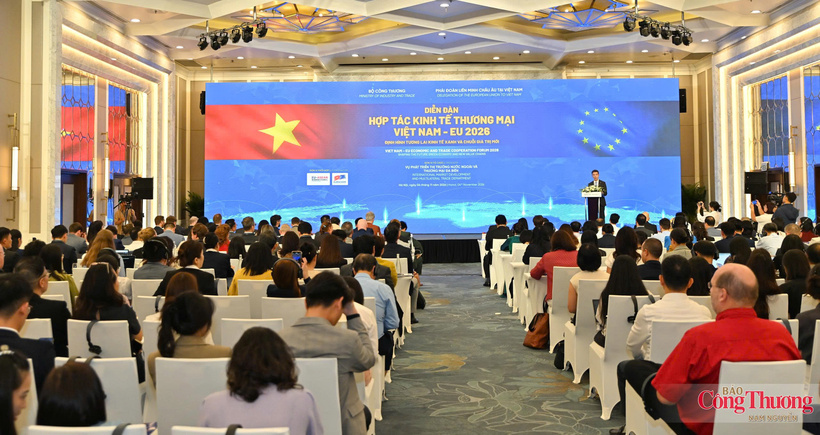
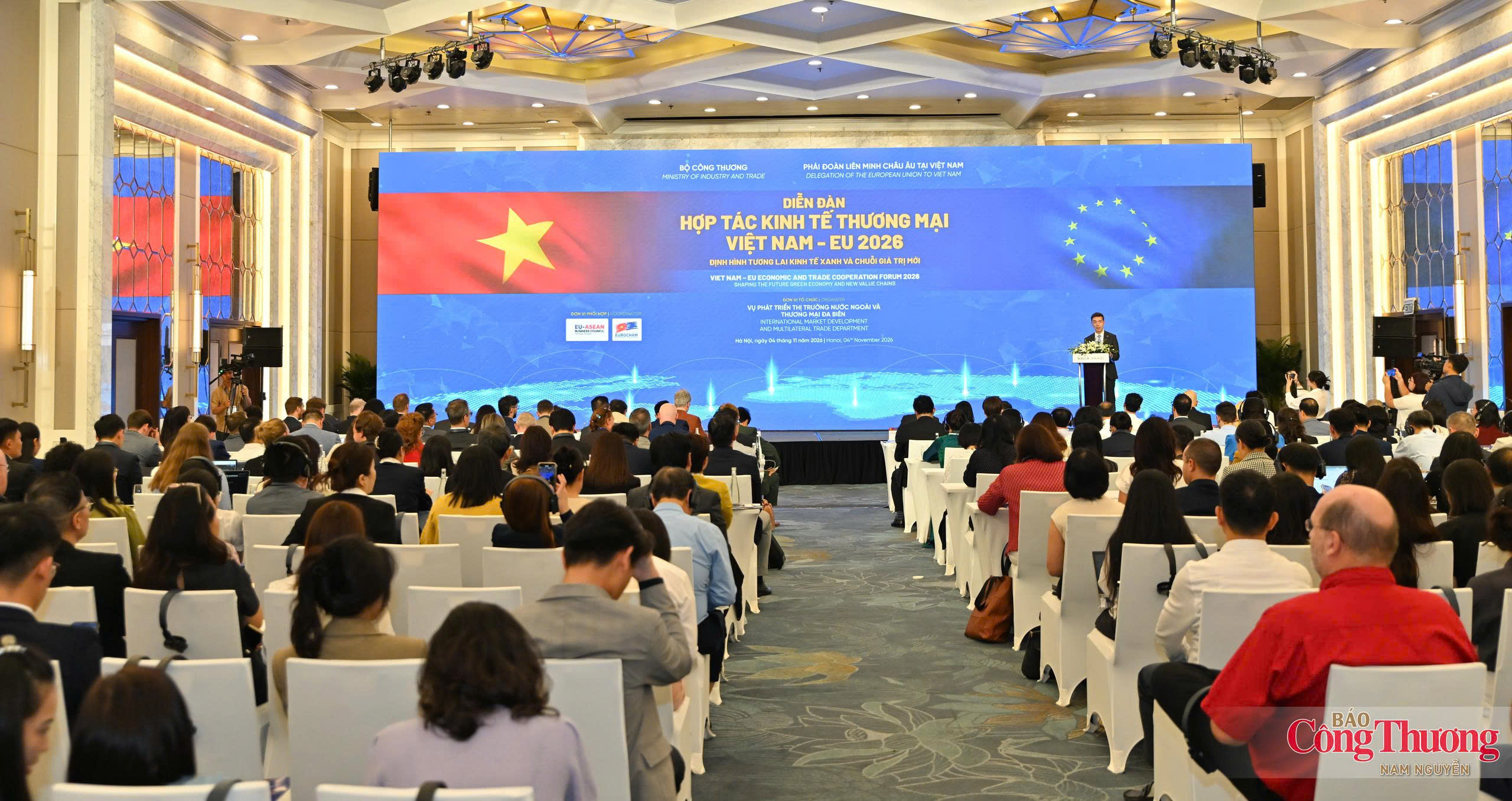
Overview of the 2026 Viet Nam - E.U. Economic and Trade Cooperation Forum, themed “Shaping the Future of the Green Economy and New Value Chains”.
E.U. remains one of Viet Nam’s leading strategic partners
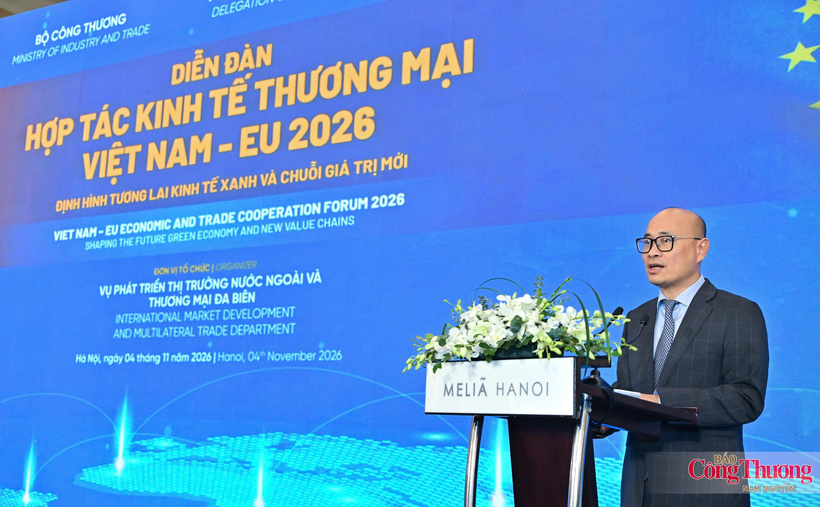
In his opening remarks, Deputy Minister of Industry and Trade Luong Hoang Thai said this was the ninth time MOIT had organized the Viet Nam - E.U. Economic and Trade Cooperation Forum. The event aims to maintain a practical and up-to-date channel of interaction between government agencies and business communities on both sides for policy dialogue, market development, and trade and investment connectivity. Over the years, the forum has gradually become an annual meeting point where partners and businesses can meet directly and explore new cooperation opportunities.
Reviewing Viet Nam’s economic performance in recent years, the Deputy Minister noted that despite profound and strategic changes in the global situation, the Vietnamese economy had maintained positive growth in 2026, demonstrating resilience, adaptability and favorable development prospects. In the first nine months of 2026, GDP grew by more than 9% year on year, the highest rate since 2011. Trade continued to be a major growth driver, with total import-export turnover exceeding USD 1 trillion to date, up more than 30% year on year.
Deputy Minister of Industry and Trade Luong Hoang Thai delivers opening remarks at the forum.
Deputy Minister Luong Hoang Thai emphasized that, supported by an extensive network of 18 free trade agreements (FTAs), a stable business and investment environment, continuously improving production capacity and its strategic location in the Asia-Pacific region, Viet Nam was continuing to affirm its role as a manufacturing and trading hub and an important link in regional supply chains. Viet Nam had also become a priority destination in the supply chain diversification and investment relocation strategies of many international partners, including European businesses.
The Vietnamese Government has set a number of strategic economic development targets, including maintaining macroeconomic stability and striving for double-digit growth during the 2026–2030 period. The country is determined to achieve average annual GDP growth of at least 10% from 2026 and enter the world’s top 30 largest economies by 2030.
In pursuing these goals, “external resources and international cooperation play an extremely important role. The E.U. has emerged as one of Viet Nam’s leading strategic partners, not only because of its level of development and market scale, but also because of the strong complementarity between the two sides’ economic and trade structures and their shared development orientations,” Deputy Minister Luong Hoang Thai said.
Viet Nam seeks strategic partnership in global supply chains
According to the MOIT Deputy Minister, 2026 marks a new phase in Viet Nam - E.U. relations, following their elevation to a Comprehensive Strategic Partnership. Together with the impetus provided by the Viet Nam - E.U. Free Trade Agreement (EVFTA), bilateral relations now have a solid foundation for promoting increasingly substantive and effective trade and investment activities.
More than six years after the EVFTA took effect, bilateral trade has maintained positive growth, with notable changes in its scale, market structure and product composition. In the first nine months of 2026, two-way trade between Viet Nam and the E.U. exceeded USD 65 billion, up nearly 20% year on year. The E.U. is currently Viet Nam’s fourth-largest trading partner, third-largest export market and sixth-largest import market. Conversely, Viet Nam is the E.U.’s largest trading partner within ASEAN and ranks ninth among the E.U.’s leading suppliers of goods.
“The EVFTA is one of the most successful agreements among the new-generation free trade agreements Viet Nam has joined,” the Deputy Minister affirmed. He said Viet Nam not only expects the E.U. to remain a key market for Vietnamese goods but also seeks to make it a top-priority strategic partner in upgrading trade, strengthening connectivity and cooperation, building comprehensive self-reliance, raising sustainable development standards and enhancing Viet Nam’s position in global supply chains.
Alongside this, Viet Nam seeks to increase the share of technology-intensive, deeply processed and high-value-added products in its cooperation with the E.U.. The country also has substantial demand for importing machinery, equipment, raw materials, advanced technologies, green solutions and circular energy technologies from Europe.
Leveraging the E.U.’s strengths in technology, management expertise and financial resources, Viet Nam calls on European partners to mobilize resources and implement technical assistance, technology transfer and investment programs for specific projects in the areas of green transformation, digital transformation, energy transition and the circular economy.
In addition, Viet Nam hopes the E.U., as an important member and a key partner in the international partner group under the Just Energy Transition Partnership (JETP), will continue to translate its financial and technology transfer support commitments into concrete projects. The JETP program should be promoted as an attractive channel for mobilizing long-term capital in the market, with the participation of multiple stakeholders.
Building on bilateral cooperation, the impetus provided by the EVFTA and expectations surrounding the Viet Nam - E.U. Investment Protection Agreement (EVIPA), Deputy Minister Luong Hoang Thai said there remained substantial room for expanding economic, trade and investment cooperation between Viet Nam and the E.U.. However, seizing and realizing new opportunities would require concrete efforts from both sides, with the participation of the business community, particularly as the international situation remained complex and fraught with potential risks and uncertainties.
“Growth drivers are gradually shifting away from reliance solely on tariff advantages toward substantive improvements in competitiveness. Accordingly, added value, sustainability standards and adaptability will be decisive factors in making effective use of the opportunities offered by the cooperation frameworks established by both sides,” the Deputy Minister noted.
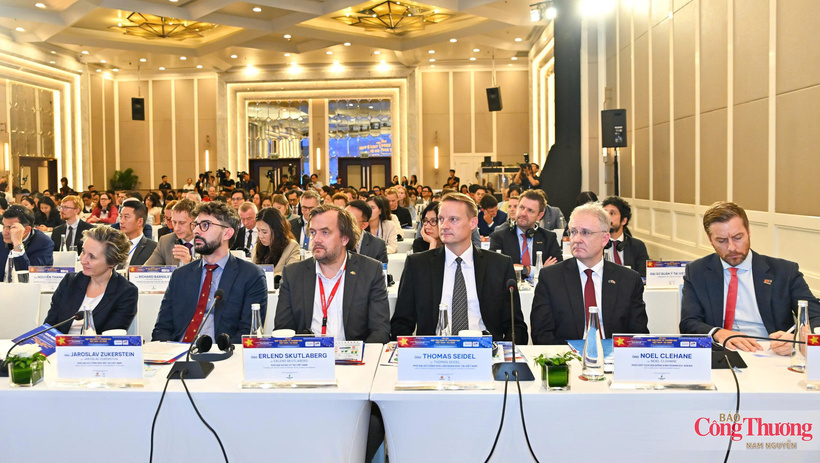
The forum attracted strong participation from domestic and international business communities.
Deputy Minister Luong Hoang Thai also affirmed that the forum provided an opportunity for both sides to identify and assess market conditions, as well as the opportunities and challenges emerging from different perspectives. It also offered a platform to seek solutions to difficulties and obstacles, optimize supply chains, upgrade trade and investment, and explore potential development avenues in industrial cooperation, energy, green finance and other emerging economic sectors of mutual interest. Businesses also had an opportunity to share experience, best practices and lessons from successful projects.
“EuroCham and EU-ABC are expected to continue strengthening their role as bridges between businesses and policymakers, between European resources and Viet Nam’s production capacity, and between cooperation ideas and projects with practical implementation potential,” Deputy Minister Luong Hoang Thai said.
He affirmed that Viet Nam would create favorable conditions and maintain a transparent and stable environment, enabling the business community in general and international enterprises, including European partners, to operate effectively and sustainably in the country over the long term.
Trade in goods between Viet Nam and the E.U. has grown significantly since the EVFTA took effect. In 2019, before the agreement came into force, two-way trade turnover stood at approximately USD 50 billion. By 2025, it had exceeded USD 73.8 billion, up nearly 8% from 2024. Viet Nam’s exports to the E.U. reached more than USD 56 billion, an increase of 8.6%.
This growth momentum continued in 2026. In the first six months of the year, two-way trade reached approximately USD 41.4 billion, including around USD 31.8 billion in Vietnamese exports to theE.U. and USD 9.7 billion in imports. Viet Nam recorded a trade surplus of approximately USD 22 billion, exceeding the USD 21.7 billion surplus for the whole of 2019, the year before the EVFTA took effect.
The forum promotes Viet Nam - E.U. economic, trade and investment ties, focusing on green growth, supply chain development and higher-value trade cooperation.
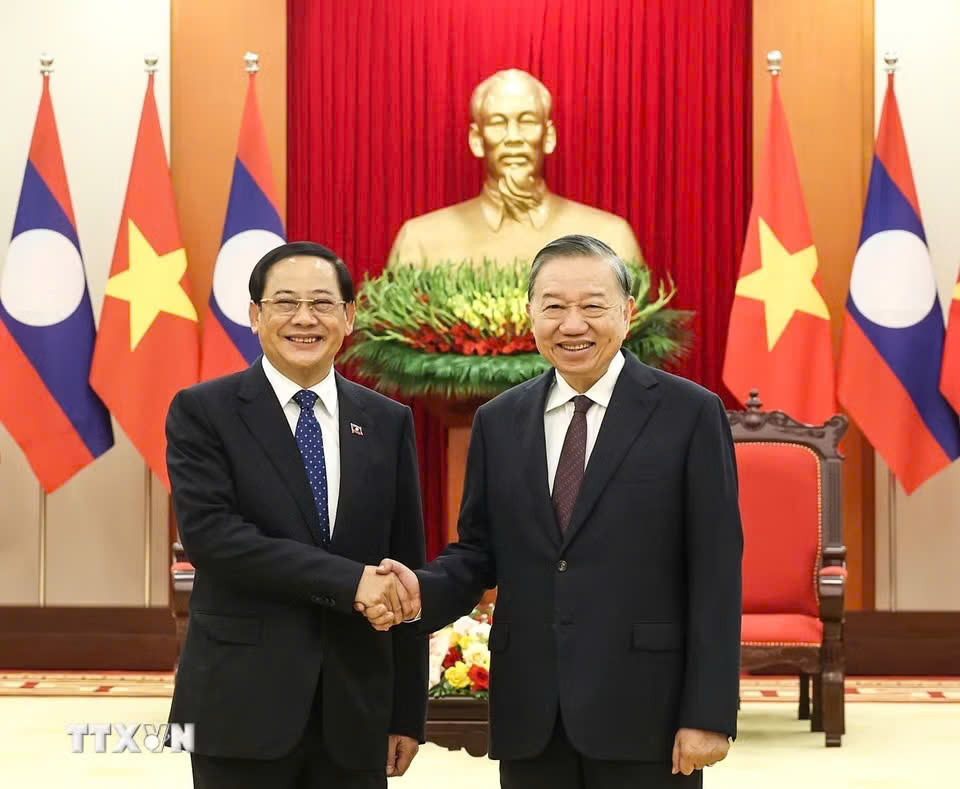
General Secretary and State President To Lam received Sonexay Siphandone, President of the Lao National Assembly, and a high-level delegation from the Lao legislature during their official visit to Viet Nam.
Viet Nam and Japan aim to promote substantive cooperation in the fields of economy, trade, investment, green transition and high-quality human resource development.
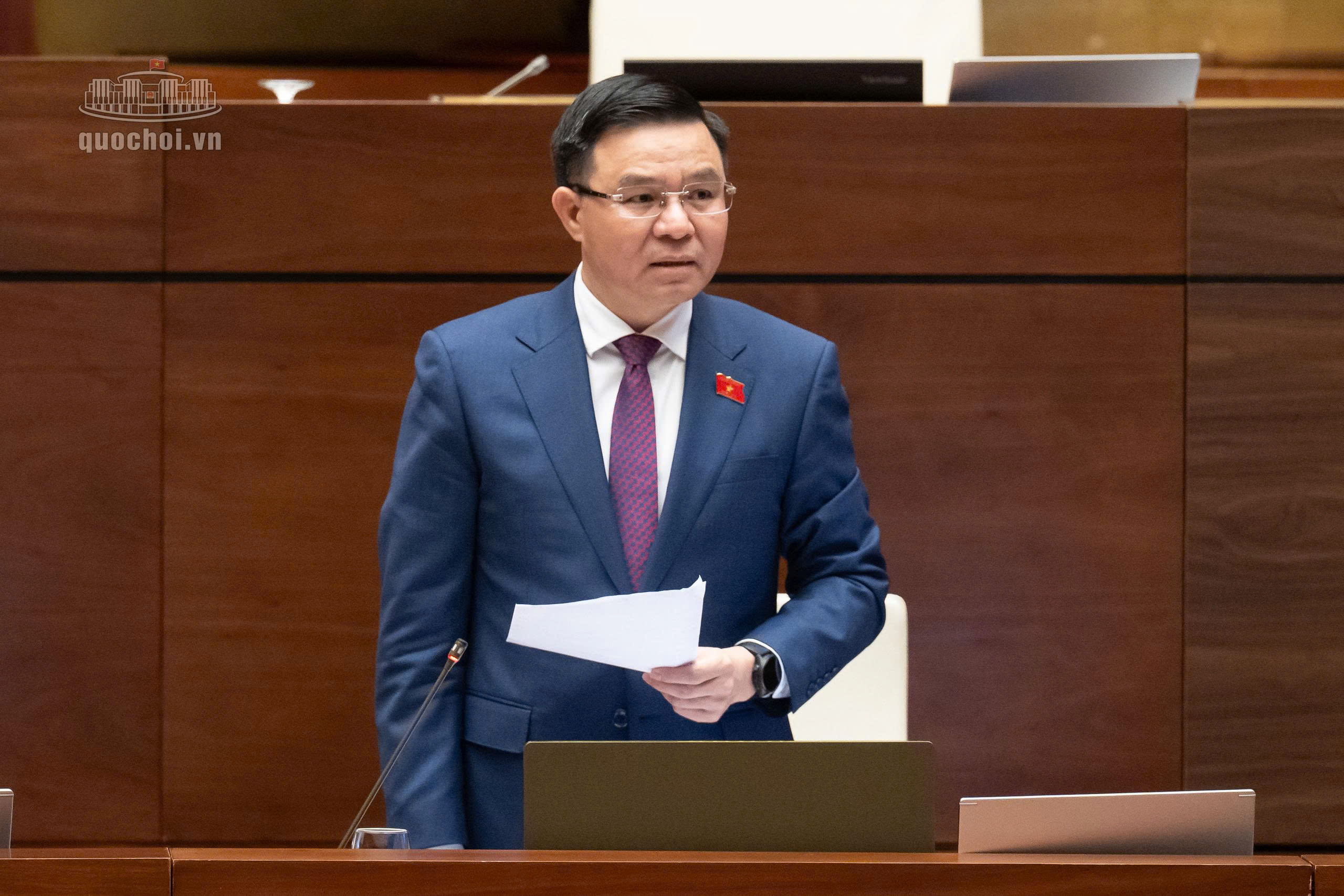
During a plenary session on November 3, Le Manh Hung, Minister of Industry and Trade, addressed questions raised by National Assembly deputies regarding the draft Law amending and supplementing a number of articles of the Law on Electricity.
During a plenary session on November 3, Le Manh Hung, Minister of Industry and Trade, addressed questions raised by National Assembly deputies regarding the draft Law amending and supplementing a number of articles of the Law on Electricity.
In the first nine months of 2026, southern provinces and cities implemented approximately 48% of their approved industrial promotion funding plans for the year. Addressing bottlenecks and accelerating project implementation are key priorities for the remaining months.
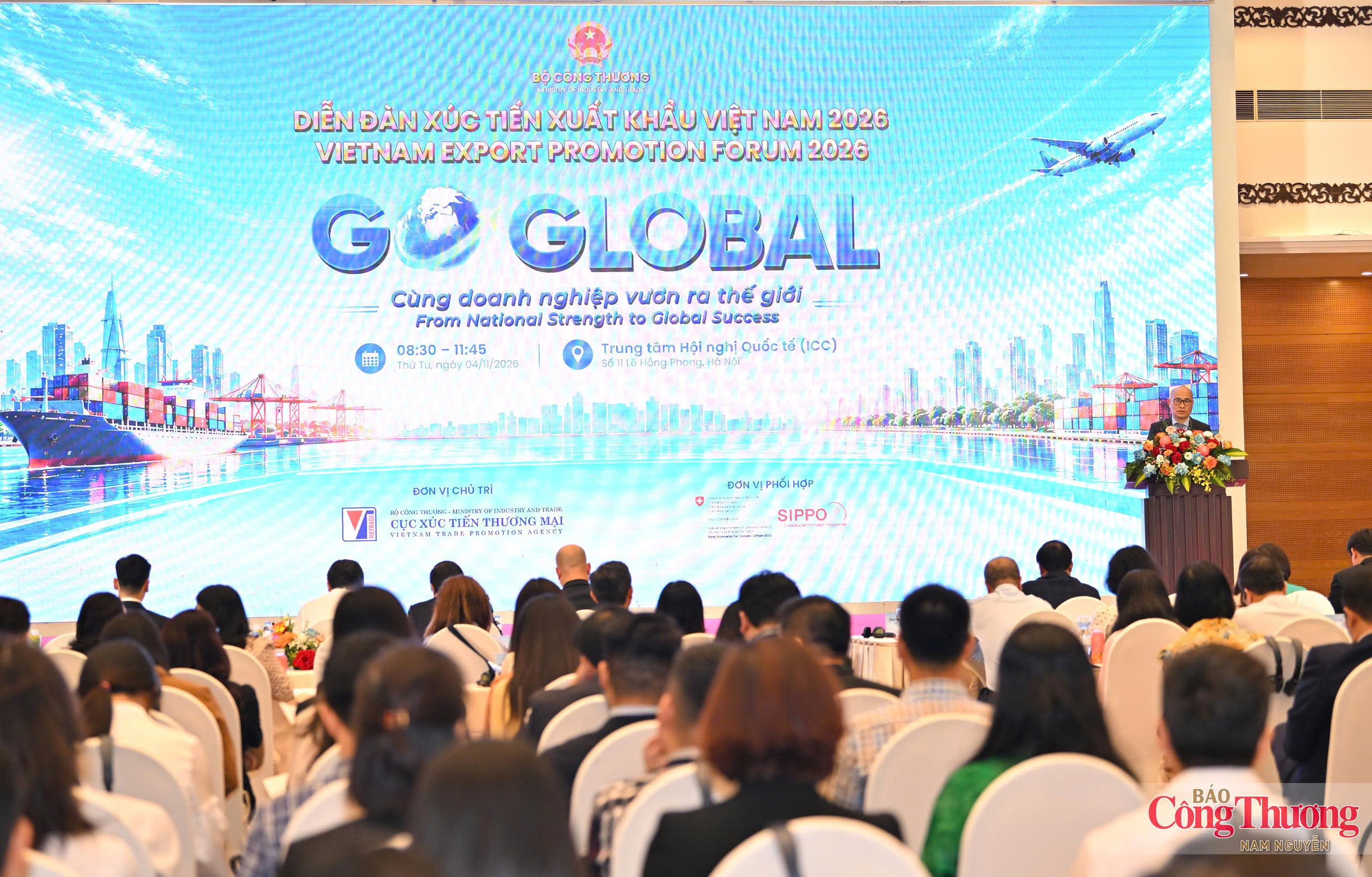
On November 4 in Ha Noi, the Steering Committee for the Go Global Programme under the Ministry of Industry and Trade organized the Viet Nam Export Promotion Forum 2026 under the theme “Go Global - Supporting businesses in reaching out to the world”, in coordination with the Swiss Import Promotion Program (SIPPO), the Viet Nam Chamber of Commerce and Industry (VCCI), and domestic and international business support organizations and trade promotion agencies.