Hà Nội was free from French occupation forces on October 10, 1954, marking a historic milestone in Việt Nam’s nine-year-long war of resistance for independence. Over the past seven decades, the capital has become a symbol of resilience, culture, and progress, thanks to the tireless efforts of its administration and people.
Following the victorious Điện Biên Phủ battle in May 1954, the Geneva Accords to restore peace in Indochina was signed on July 21, 1954, stipulating that French occupation forces must withdraw from North Việt Nam, and the resistance government of President Hồ Chí Minh shall take over capital Hà Nội.
The Hồ Chí Minh government set up the Hà Nội Military Administrative Committee on September 17, 1954 to prepare for the French handover of the city.
By October 8, the first units of the Vietnam People's Army were advancing towards Hà Nội from various directions, and by October 9, they entered the city through its main entrances, taking control of key public offices and facilities, including the Governor's Palace and the Hà Nội railway station.
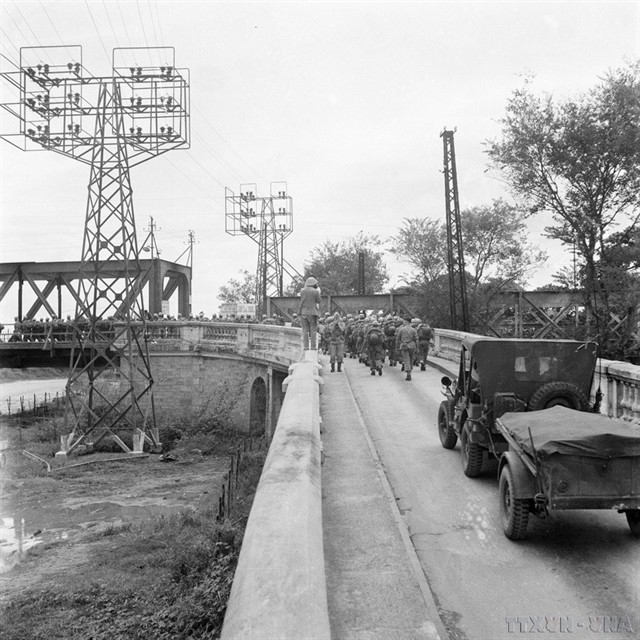
The French troops retreated across Long Biên Bridge towards the port city of Hải Phòng, marking the completion of the handover.
 |
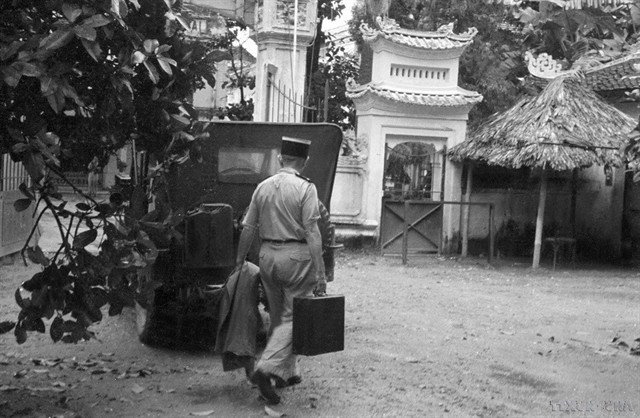
| A French army officer carries his belongings onto a jeep as he prepares to leave Hà Nội. — VNA/VNS Photo |
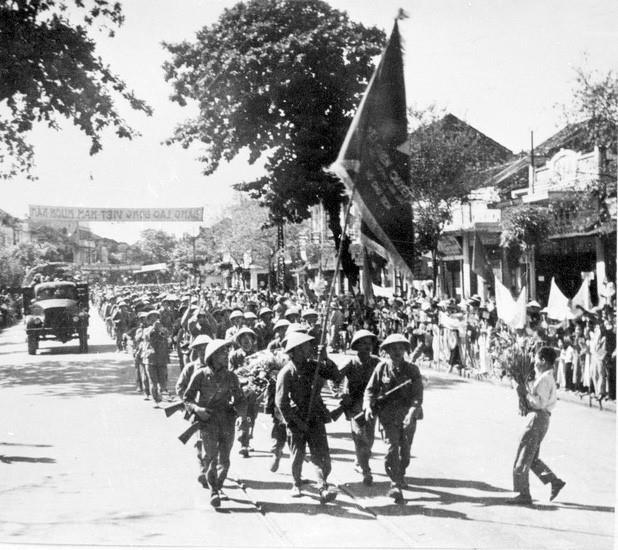
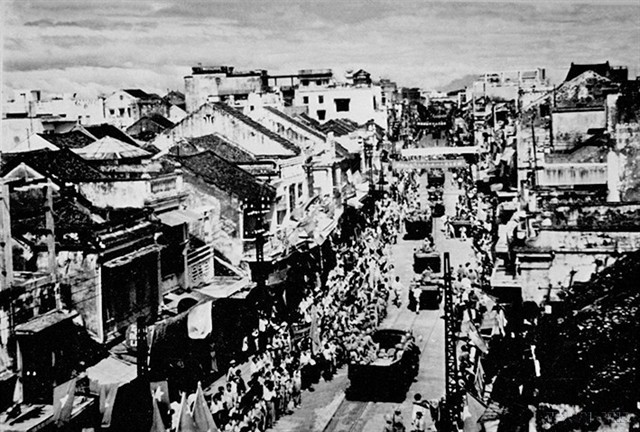
The takeover of Hà Nội was celebrated on the morning of October 10, with a grand military parade across the city that included infantry, artillery and anti-aircraft units. The Western column, consisting of the Capital Infantry Regiment, passed through the streets of Kim Mã, Nguyễn Thái Học, Hàng Đẫy, Cửa Nam, and Hàng Bông, before arriving at Cửa Đông by 9:45am.
|
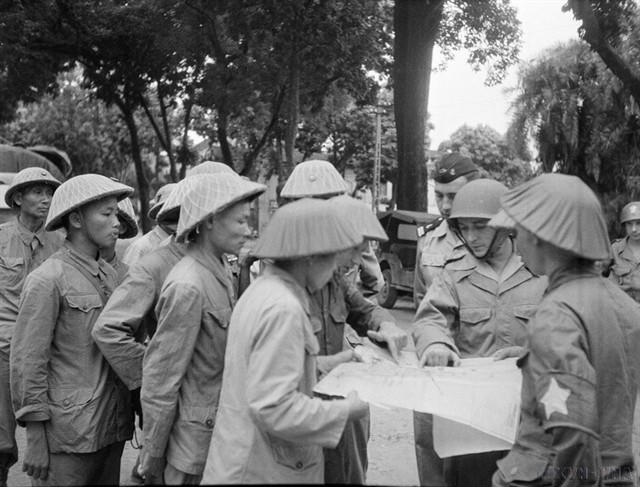
| A French officer hands over control of the city to Vietnamese troops. — VNA/VNS Photo |
|
| Vietnamese troops take over the Police Station at Hàng Đậu Street on October 9, 1954. — VNA/VNS Photo |
The Southern column, composed of the 88th and 36th Regiments, commenced their march at 8.45am from Việt Nam Học Xá (now in the campus of the Hanoi University of Science and Technology).
Their route took them through Bạch Mai and Huế streets, where they circled Hoàn Kiếm Lake before taking up positions in Đồn Thủy (now Central Military Hospital 108) and Đấu Xảo (now Friendship Cultural Palace).
|
| French troops retreat across Long Biên Bridge, heading toward Hải Phòng City, on October 9, 1954. — VNA/VNS Photo |
The Capital Takeover Command, led by the Hà Nội Military Administrative Committee Chairman, General Vương Thừa Vũ, and Deputy Chairman Dr Trần Duy Hưng, departed from Bạch Mai Airport at 9:30am, marching through Vọng and Trung Hiền Intersections, then along the streets of Bạch Mai, Huế, Hàng Bài, and Đồng Xuân, before entering central city through Cửa Bắc (North Gate).
|
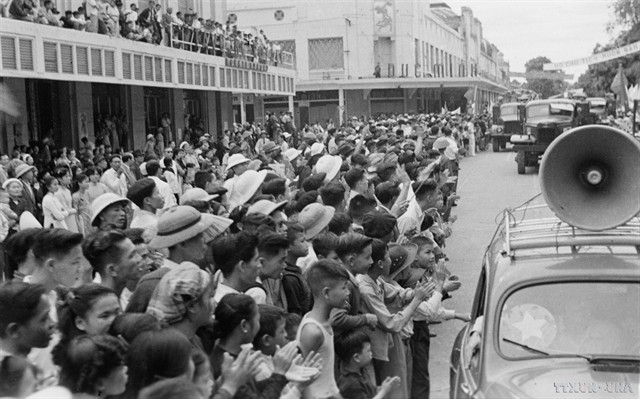
| Thousands of Hanoians take to the streets to welcome the victorious troops with flowers and banners as they march through the capital on October 10, 1954. — VNA/VNS Photo |
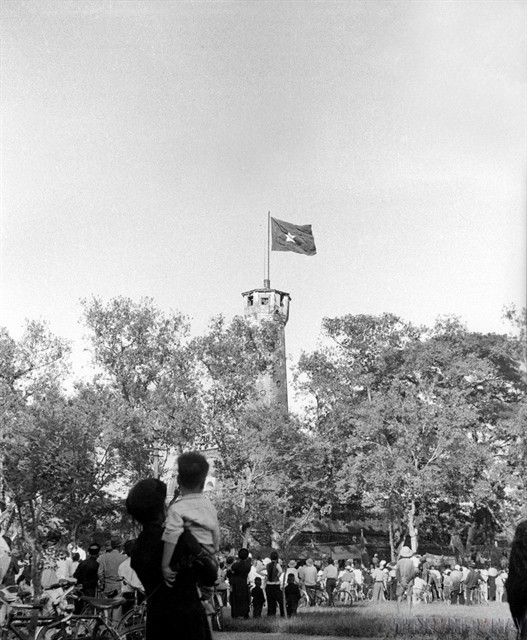
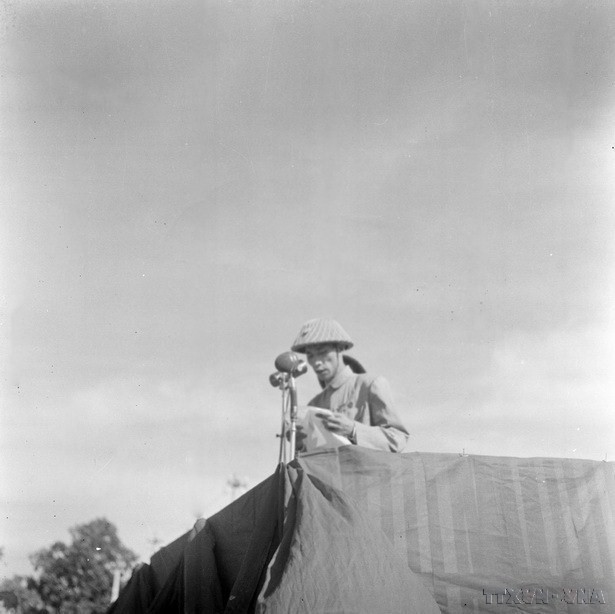
After the parade, the troops and Hà Nội residents gathered at the Cột Cờ Stadium for a flag-raising ceremony at 3pm. Committee Chairman Gen Vũ read aloud President Hồ Chí Minh's message to the people of Hà Nội.
In the message, President Hồ wrote, "Over the past eight years, the Government had to evacuate the capital to wage a war of resistance for the country's independence. Though far apart, the Government's heart has always been with the people of Hà Nội. Thanks to the people's unity and the army's bravery, peace has prevailed, and the Government has returned to the capital. We are now reunited as one family, and our joy is immeasurable."
|
| Vietnamese troops on vehicles parade through a street of Hà Nội on October 10, 1954 to the warm welcome of the locals — VNA/VNS Photo |
|
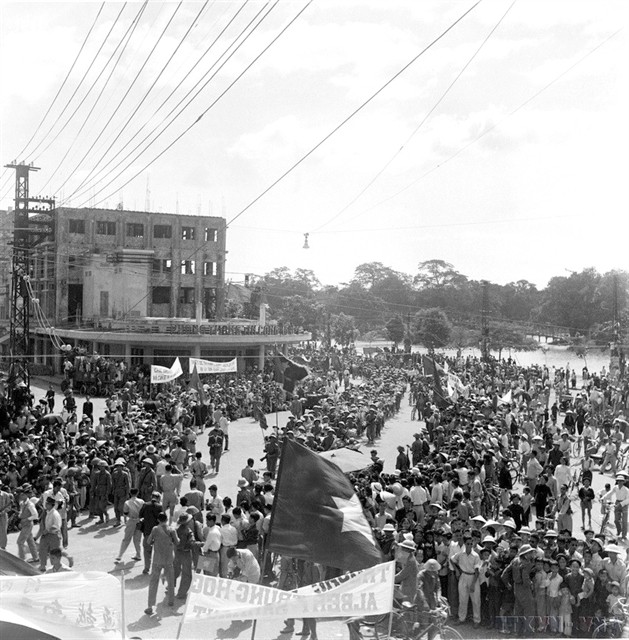
| Hà Nội citizens pour into the streets around Hoàn Kiếm Lake to greet the victorious troops. — VNA/VNS Photo |
|
| The 308th Division marches into Hoàn Kiếm Lake Intersection (now Đông Kinh Nghĩa Thục Square) amid the cheers of Hà Nội residents. — VNA/VNS Photo |
|
| Hà Nội residents look up at the Vietnamese gold-star flag flying on the Flag Tower, a powerful symbol of their newly won freedom on October 10, 1954. — VNA/VNS Photo |
|
| Military Administrative Committee Chairman and 308th Division Commander Major General Vương Thừa Vũ delivers President Hồ Chí Minh's message to Hà Nội citizens at the flag-rising ceremony on October 10, 1954. — VNA/VNS Photo |
The liberation of Hà Nội stands as a pivotal moment in Việt Nam's history, representing the country's triumph over French colonialism and the beginning of a new era for the thousand-year-old city.
|
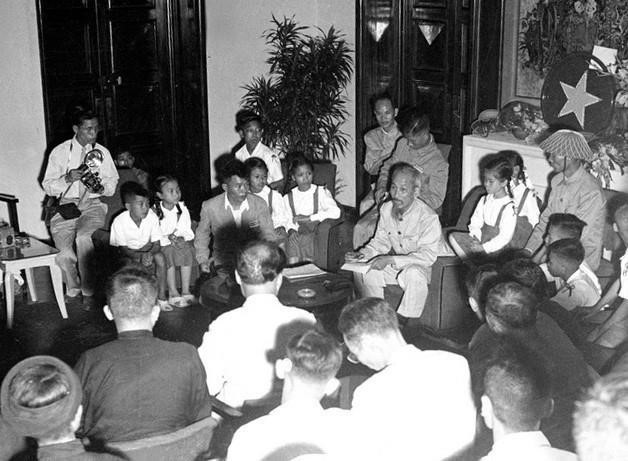
| President Hồ Chí Minh meets with Hà Nội residents' representatives on October 16, 1954. — VNA/VNS Photo |
In the seven decades since, Hà Nội has made significant achievements in all fields. From a population of less than 440,000 in 1954, Hà Nội now has over 8 million residents, with an annual income per capita of VNĐ150 million (US$6,100).
The city achieved a regional GDP growth rate of 6.27 per cent in 2023, surpassing the national average of 5.00 per cent.
Hà Nội has earned a reputation as a "City of Heritage", boasting over 5,900 historic, cultural and spiritual sites, and as a "City for Peace", recognised by UNESCO. It has been awarded the State's Gold Star Order three times, and holds the distinguished title of "Heroic Capital".
Looking forward, Hà Nội has ambitious plans for its future. The city envisions itself as a "City of Culture, Civilisation, and Modernity" by 2030, aiming to become a global cultural centre, a leader in science and technology, and an economic hub that drives national growth.