Building trusted brands, investing in people and strengthening domestic suppliers are key to helping Vietnamese businesses enhance their position in global value chains.
As Viet Nam seeks to strengthen its position in global value chains during 2026–2030, businesses are expected to generate new growth drivers through innovation, higher productivity and stronger brand value. Expanding exports remains important, but establishing lasting recognition and trust among international consumers is an equally significant challenge.
According to Saigon Beer – Alcohol – Beverage Corporation (SABECO), sustainable global competitiveness must be built on strong domestic capabilities and a resilient local business ecosystem.
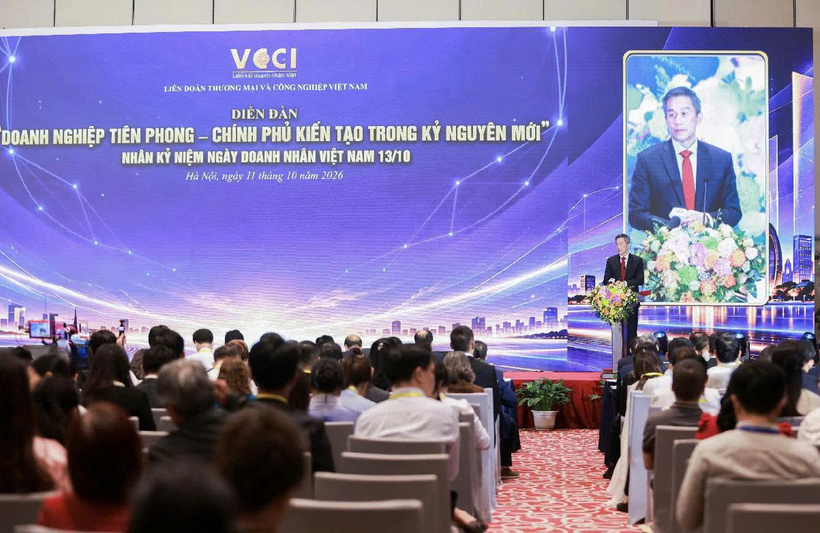
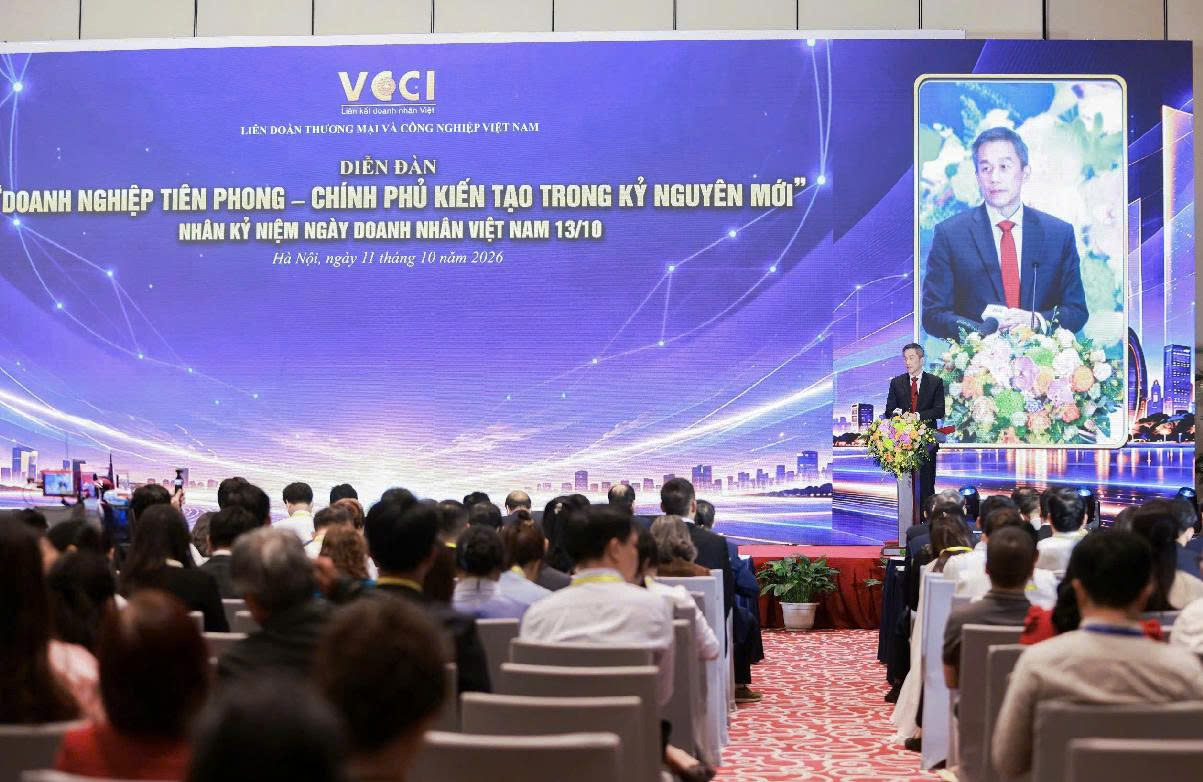
Business leaders share insights at the forum on October 11 (Photo: Organising Committee)
The perspective was shared at the forum “Pioneering Entrepreneurs – An Enabling Government in the New Era”, organised by the Viet Nam Chamber of Commerce and Industry (VCCI) to mark Vietnamese Entrepreneurs’ Day.
For years, Vietnamese businesses have often measured international success by export volumes and the number of overseas markets they reach. However, entering a market does not necessarily mean securing a lasting position in it.
As global competition increasingly centres on quality, reputation and brand value, export growth alone is insufficient. Sustainable international expansion also requires businesses to build brands that consumers recognise, trust and choose over the long term.
SABECO, one of Viet Nam’s leading beverage companies, has brought its flagship brands, including Bia Saigon and 333, to more than 40 countries and territories. Its export activities recorded a 221% increase in the first half of 2026 compared with the same period last year.
Speaking at the forum, SABECO General Director Lester Tan said the next stage of international expansion should focus on the value that Vietnamese brands deliver to consumers.
“True success is whether Bia Saigon and 333 are recognised, trusted and chosen by consumers in international markets,” he said.
For a Vietnamese brand to gain traction overseas, it first needs a distinct identity. SABECO said its brand identity has been shaped by more than 150 years of heritage in Viet Nam, a network of 26 breweries and products that have served generations of domestic consumers.
International awards received by Bia Saigon, Bia 333 and Bia Lac Viet demonstrate the quality of Vietnamese beer against recognised international benchmarks, according to the company. The next challenge is to ensure that their brand value meets the preferences and expectations of consumers in individual markets.
While brand recognition is the outward expression of competitiveness, internal capabilities determine whether a business can maintain its position over time. Building a globally competitive brand requires a strong operational foundation, skilled employees and capable suppliers and business partners.
At the forum, participants highlighted the broader role of businesses in supporting Viet Nam’s development ambitions. Their contribution can extend beyond commercial performance to strengthening the capabilities of the wider business ecosystem.
VCCI Chairman Ho Sy Hung said the Government could create room for development through institutional reforms, while businesses were responsible for turning that space into new value.
This responsibility is particularly significant for leading companies, whose standards and business practices can influence the capabilities of their suppliers and partners.
Tan said leadership should be assessed not simply by a company’s ranking within an industry, but also by its ability to raise standards, create opportunities and strengthen the capabilities of other businesses.
“Leadership today is not simply measured by being number one in a category, but by the ability to raise standards, open up new opportunities, strengthen partners’ capabilities and create progress beyond the boundaries of one’s own business,” he said.
At SABECO, efforts to strengthen internal capabilities begin with its workforce. The company combines local brewing expertise with international standards, while investing in research and development to respond to the diverse requirements of different markets.
The company also works with a domestic supplier network to reinforce its supply chain. In 2025, 94% of SABECO’s procurement budget was allocated to domestic suppliers, providing opportunities for these businesses to improve their capabilities and adopt new technologies.
Tan said strong suppliers and partners were essential to building resilience and ensuring reliable supply.
“No business can build global competitiveness on its own. Strong suppliers improve adaptability in the face of change. Strong partners enhance supply capacity. A strong ecosystem raises standards for everyone,” he said.
The approach reflects the view that international competitiveness is not developed by an individual company in isolation. Instead, it depends on the combined capabilities of businesses throughout the value chain, from production and technical expertise to sourcing and supply management.
As part of activities marking Vietnamese Entrepreneurs’ Day, Tan was honoured by VCCI under the 2026 Thanh Giong Cup programme, which recognises contributions to business development, innovation and international integration.
The recognition highlights SABECO’s efforts to strengthen its competitiveness and expand its international presence. However, the company views such achievements as milestones in a longer-term process rather than an end in themselves.
With global competition intensifying, the broader objective is to develop Vietnamese brands capable of building lasting trust in international markets.
For Vietnamese businesses, the next stage of internationalisation will therefore involve more than bringing products overseas. It will require creating brands with lasting value, investing in people and innovation, and strengthening domestic supply chains.
Every Vietnamese brand that earns consumer trust abroad can contribute to perceptions of Vietnamese product quality, while improvements in the capabilities of domestic suppliers and workers can reinforce the country's value chains.
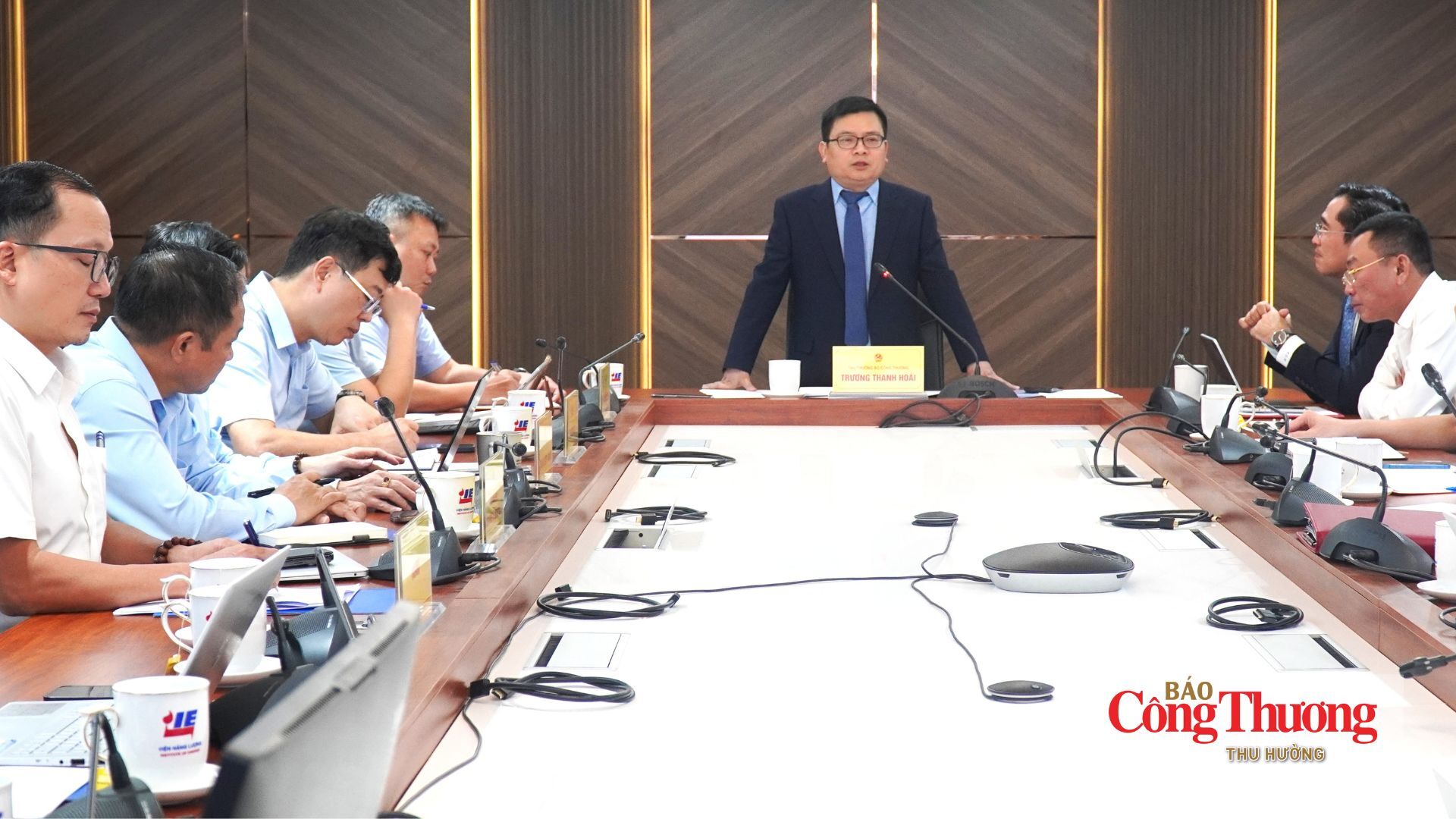
On October 26, Deputy Minister of Industry and Trade Truong Thanh Hoai held a working session with the Institute of Energy to discuss power sector development tasks and announce the appointment of the Institute's new director.
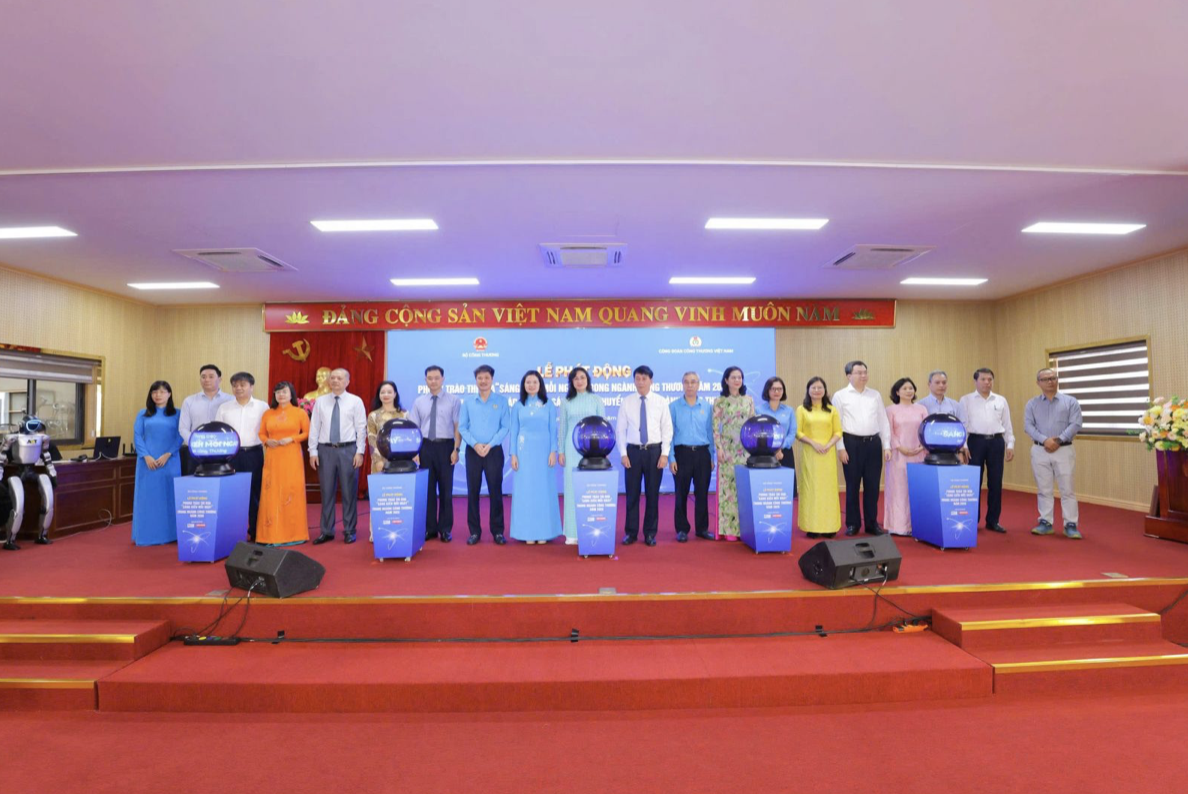
MoIT has launched two initiatives to encourage practical ideas and accelerate innovation and digital transformation across the industry and trade sector.
Building trusted brands, investing in people and strengthening domestic suppliers are key to helping Vietnamese businesses enhance their position in global value chains.
As Vietnam attracts growing manufacturing investment, companies are placing greater emphasis on operational readiness to ensure new factories can begin production efficiently.