Geopolitical tensions and energy transition pressures are pushing vietnam’s petroleum sector to expand reserves, diversify supply sources and upgrade fuel standards.
Geopolitical volatility puts pressure on supply
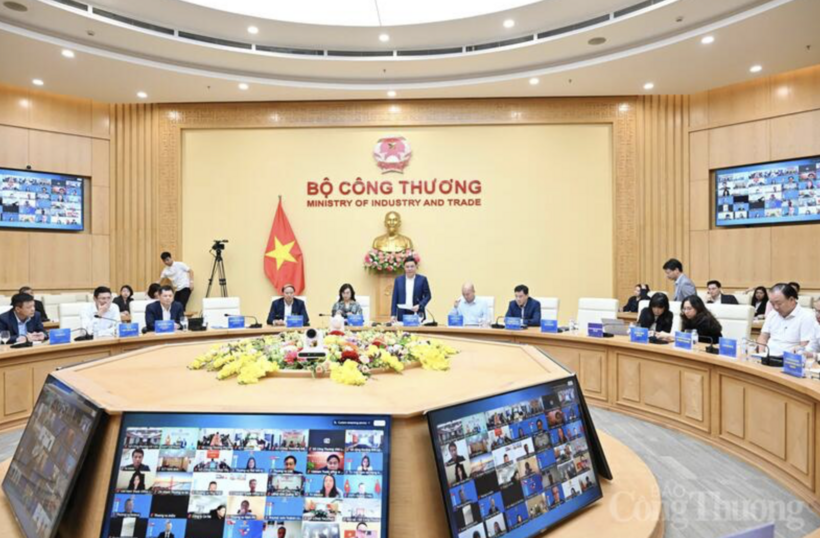
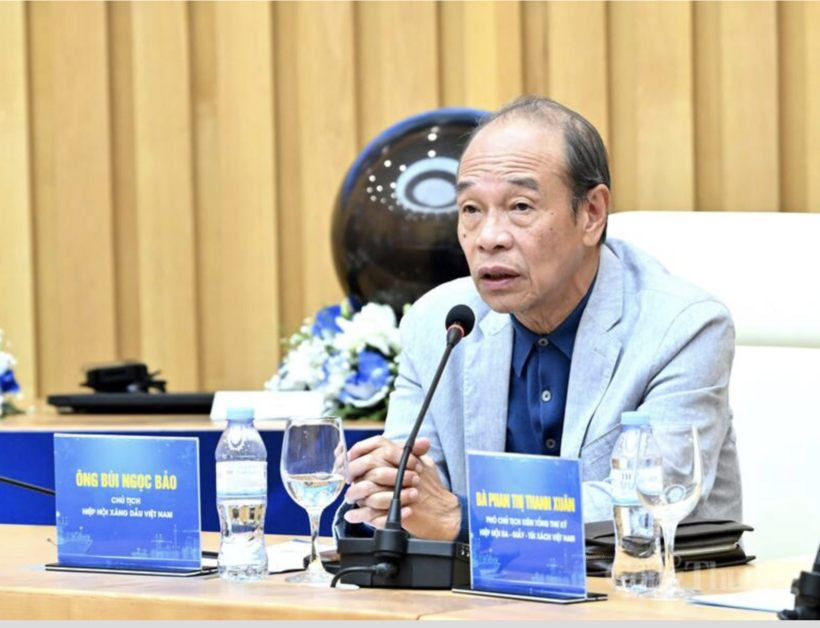
At a trade promotion briefing with Vietnam’s overseas trade offices held on March 12 and organized by the Ministry of Industry and Trade, Bui Ngoc Bao, Chairman of the Vietnam Petroleum Association, presented several assessments regarding growth prospects for the energy sector in 2026 while proposing solutions to ensure supply security and maintain stable petroleum imports.
According to Bui Ngoc Bao, evaluating growth in the petroleum and energy sectors solely through trade turnover or revenue fails to fully reflect the true dynamics of the market.
“In the petroleum industry, growth indicators should be measured by output rather than trade value. Market price fluctuations can push turnover significantly higher even when actual consumption volumes remain largely unchanged,” he emphasized.
At the event. Photo: Can Dung
The Vietnam Petroleum Association estimates that in 2026 and the years ahead, Vietnam’s petroleum consumption is expected to grow by only about 4 - 5% annually, a level considered consistent with the country’s economic growth and the broader trend toward energy conservation.
By contrast, when measured in terms of trade value, growth could exceed 10% due to fluctuations in global oil prices.
He noted that in some recent periods, international petroleum prices have surged by as much as 40 - 50%, causing total import turnover to rise sharply even though import volumes did not increase proportionally.
“Therefore, evaluating the growth of the petroleum sector based solely on trade value does not accurately reflect the real nature of the energy market,” he said.
Beyond growth metrics, the sector’s most pressing challenge today is ensuring a stable supply amid strong turbulence in the global energy market.
According to Bui Ngoc Bao, in recent years, the Government and the Ministry of Industry and Trade have issued decisive directives to secure domestic petroleum supply. Key petroleum traders have also proactively sought to diversify supply sources in the international market.
However, the energy market continues to face significant external pressures, particularly from ongoing conflicts in the Middle East.
Bui Ngoc Bao, Chairman of the Vietnam Petroleum Association. Photo: Can Dung
One of the most critical bottlenecks lies at the Strait of Hormuz, a strategic maritime corridor through which roughly 80% of the oil destined for Asia and about 20% of the world’s total oil supply passes.
“This is a major chokepoint for the global energy market. Any disruption in this area would immediately affect the global petroleum supply chain,” he noted.
As a result, even when companies have secured long-term import contracts, the risk remains that suppliers could declare force majeure if deliveries are disrupted by military conflict or political developments.
This makes forecasting and balancing overall petroleum supply significantly more difficult.
New growth drivers for the sector
Despite these challenges, Vietnam’s petroleum sector still has several potential growth drivers in 2026. According to Bui Ngoc Bao, one key factor is the planned rollout of E10 biofuel nationwide.
Under current plans, Vietnam will begin large-scale deployment of E10 gasoline, fuel blended with 10% bioethanol, starting on June 1, 2026.
“The introduction of E10 will increase demand for ethanol imports by approximately 600,000 - 700,000 tonnes per year. This will become a new source of import turnover for the fuel sector in 2026,” he said.
Delegates attending the conference. Photo: Can Dung
Currently, ethanol supply in the global market mainly comes from the US and Brazil, with the US being the largest supplier. Vietnamese petroleum importers will therefore need to strengthen cooperation with partners in these markets.
Another growth driver for the petroleum sector lies in the process of upgrading fuel standards to meet emissions reduction and environmental protection goals.
The Chairman of the Vietnam Petroleum Association said that in the coming years, Vietnam will gradually transition to higher-quality fuels that meet Euro 4 and Euro 5 standards. This transition will in turn drive increased demand for higher-grade petroleum products.
The conference is held in both in-person and online formats. Photo: Can Dung
According to Chairman of the Vietnam Petroleum Association Bui Ngoc Bao, amid continued volatility in global energy markets, building a flexible strategic reserve mechanism will enable Vietnam to respond more effectively to supply disruptions and stabilize the domestic market.
“Energy security must be viewed as a long-term strategic issue. Only with adequate reserves and stable supply sources can the country effectively respond to fluctuations in the global market,” Bao stressed.
Vietnam and China pushed stronger cooperation in education, science and innovation, with a focus on AI, semiconductors and youth exchange as key future drivers.
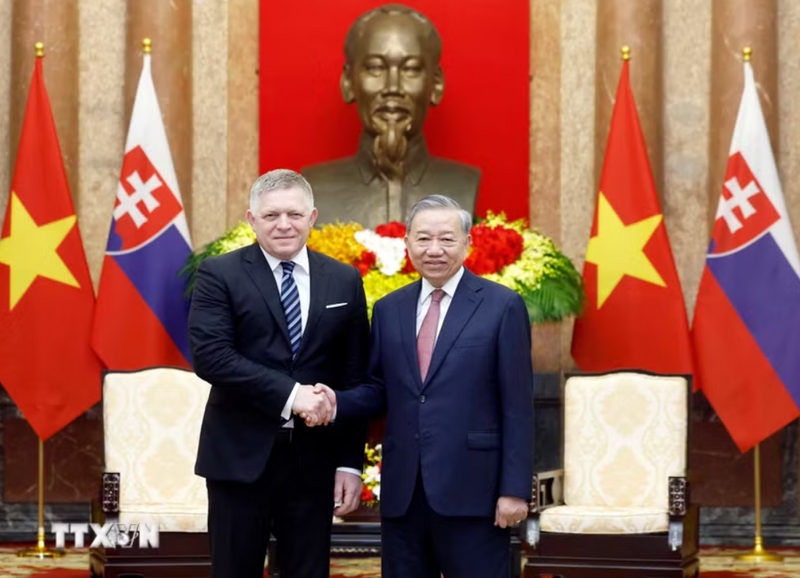
On April 13 in Hanoi, Prime Minister Le Minh Hung and Slovak Prime Minister Robert Fico attended the opening session of the Vietnam - Slovakia Business Forum.
Vietnam and Slovakia upgraded ties to a Strategic Partnership during Prime Minister Robert Fico’s visit, paving the way for deeper cooperation across key sectors.
Vietnam and China pushed stronger cooperation in education, science and innovation, with a focus on AI, semiconductors and youth exchange as key future drivers.
On April 13 in Hanoi, Prime Minister Le Minh Hung and Slovak Prime Minister Robert Fico attended the opening session of the Vietnam - Slovakia Business Forum.
Vietnam and Slovakia upgraded ties to a Strategic Partnership during Prime Minister Robert Fico’s visit, paving the way for deeper cooperation across key sectors.