Editor-in-Chief Nguyen Van Minh highlighted the press's role in promoting Vietnam’s brand globally and safeguarding national interests in the digital era.
Editor-in-Chief of Newspaper of Industry and Trade Nguyen Van Minh stated that the press has the mission and responsibility to promote Vietnam’s brand so it can rise higher on the global stage, while safeguarding national interests to ensure sustainable development.
National brand: an intangible asset with tangible benefits
On the morning of June 20, within the framework of the 2026 National Press Festival, the National Press Forum 2026 took place. At a discussion session titled “Promoting Vietnam’s image in the digital press ecosystem,” journalist Nguyen Van Minh, Editor-in-Chief of Newspaper of Industry and Trade, emphasized that the forum was held on a particularly meaningful occasion marking the 101st anniversary of the Vietnamese Revolutionary Press Day.
On June 21, 1925, the Thanh Nien newspaper, founded and directly led by leader Nguyen Ai Quoc, published its first issue, laying the foundation for the development of Vietnam’s revolutionary press.
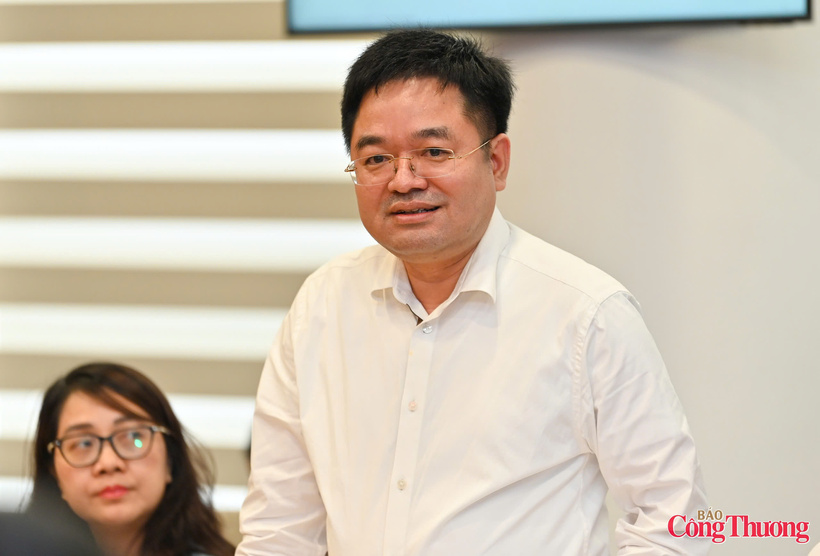
Editor-in-Chief of Newspaper of Industry and Trade Nguyen Van Minh delivers remarks at a discussion session within the framework of the National Press Forum 2026. Photo: Nam Nguyen
However, from the perspective of a journalist working in the industry and trade sector, Nguyen Van Minh offered a different approach. He recalled that in the Proclamation issued on August 28, 1945, by the Provisional Government of the Democratic Republic of Vietnam, the Ministry of National Economy was established as the agency responsible for economic affairs.
Within the still-young state apparatus at the time, the Vietnam Economic Review Office was tasked primarily with publishing the Vietnam Economic Review and conducting research and communications activities to promote economic development. This publication later became the predecessor of Newspaper of Industry and Trade, the official mouthpiece of the Ministry of Industry and Trade and a forum for Vietnam’s industry and trade community.
On October 13, 1945, shortly after the Democratic Republic of Vietnam was founded, President Ho Chi Minh sent a letter to the business community. In that letter, he affirmed: “A prosperous national economy means prosperous business activities for industrialists and traders.”
“Recalling this historical event helps us understand that in Ho Chi Minh’s thought, the role of the press was of paramount importance. To develop the economy, economic communication must be carried out effectively. What President Ho Chi Minh aspired to see has today become a reality through the country’s development,” Nguyen Van Minh stressed.
Drawing from practical experience, the Editor-in-Chief noted that over the years he has visited more than 30 countries and frequently accompanied leaders of the Party, the State and the Ministry of Industry and Trade on negotiations, meetings with foreign partners, major corporations, international conferences and national-level trade promotion programs.
“The more I travel and observe, the more deeply I appreciate two realities that always go hand in hand: the weight of Vietnam’s brand when standing before the world, and the price that must be paid to safeguard national interests at every negotiating table,” he shared.
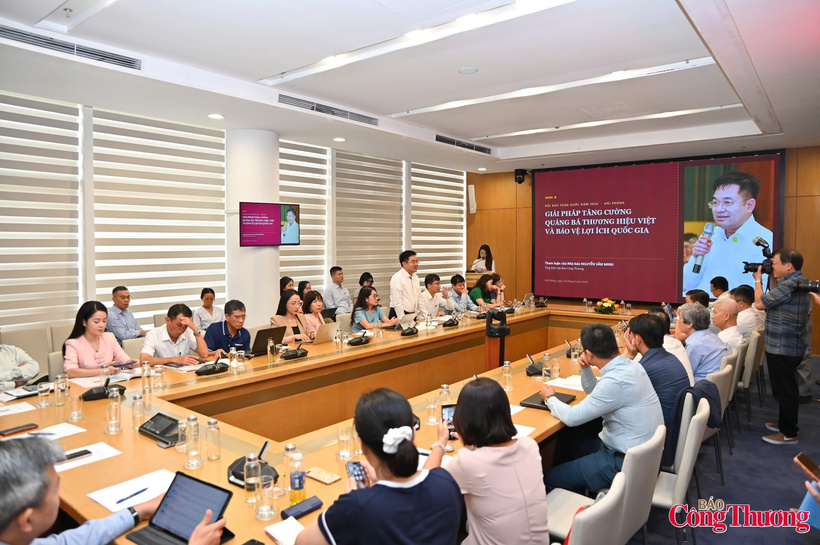
An overview of the discussion session. Photo: Nam Nguyen
According to Nguyen Van Minh, every country possesses two types of assets. One can be measured through factories, infrastructure and natural resources. The other cannot be quantified by conventional standards: trust, reputation and the national brand. If products serve as bridges connecting an economy to the world, then the national brand is the country’s face in the global marketplace.
Recent figures demonstrate Vietnam’s impressive momentum. In 2024, Brand Finance valued Vietnam’s national brand at USD 507 billion, ranking it 32nd among 193 countries and territories. In 2025, the value increased to USD 519.6 billion, allowing Vietnam to maintain its 32nd-place global ranking.
However, according to the Editor-in-Chief, behind these encouraging figures lies a paradox. While Vietnam ranks 32nd globally in national brand value, it stands only 52nd out of 193 countries and territories in the 2025 Global Soft Power Index. This indicates that Vietnamese products have become increasingly competitive, but the voice promoting Vietnamese products on the international stage still needs to be amplified more strongly.
Nguyen Van Minh further noted that the Vietnam Value Program, approved by the Prime Minister under Decision No. 253/2003/QD-TTg dated November 25, 2003, with the Ministry of Industry and Trade serving as the standing agency, has now been implemented for more than two decades. He said its greatest achievement lies in the fact that the brands of individual enterprises have collectively contributed to strengthening the national brand.
“As the official newspaper of the Ministry of Industry and Trade, Newspaper of Industry and Trade recognizes that its responsibility extends beyond reporting on the sector’s activities. We must accompany businesses and localities on their journey to promote Vietnam’s brand,” he emphasized.
Over the years, the newspaper has developed a multi-platform communications ecosystem encompassing its online newspaper, infographics, long-form articles, videos, feature reports and social media channels. It also operates a dedicated Vietnam Value section and has actively accompanied Vietnam Brand Week and international forums held around Vietnam Brand Day on April 20.
Two pillars, one common foundation
Analyzing current realities, Nguyen Van Minh pointed out that compared with countries that have advanced further in this field, Vietnam’s press and communications sector remains in the early stages of a “game” that many nations have already institutionalized in a systematic manner.
The Republic of Korea has transformed the Hallyu wave into a major export industry, with state funding for cultural industries reaching KRW 1.74 trillion in 2024. Japan established the Cool Japan Fund in 2013 with a commitment of JPY 50 billion, equivalent to approximately USD 500 million. Thailand has promoted its “Thai SELECT” certification issued by the Ministry of Commerce alongside its “5F” soft power strategy, comprising Food, Film, Festival, Fight and Fashion.
What these countries share is clear: a national-level coordinating body, stable financial resources and a multilingual external communications system serving as the spearhead of their efforts.
In Vietnam, although the “Media and Communications” pillar in the country’s soft power index has risen by 23 places, it still ranks only 78th globally. Many experts have pointed out that efforts to promote the country’s image, products and brands remain fragmented and have yet to fully harness collective strength. Most activities still focus on introducing what already exists rather than responding directly to the interests and demands of international audiences. Vietnam also lacks a comprehensive, national-scale strategy in this area.
Against this backdrop, Nguyen Van Minh stressed that promoting the national brand and safeguarding national interests are not separate issues. Rather, they are two dimensions of a single strategic mission, in which the industry and trade press has the responsibility to serve as a bridge for information, spread Vietnamese values and contribute to protecting national interests in the digital communications space.
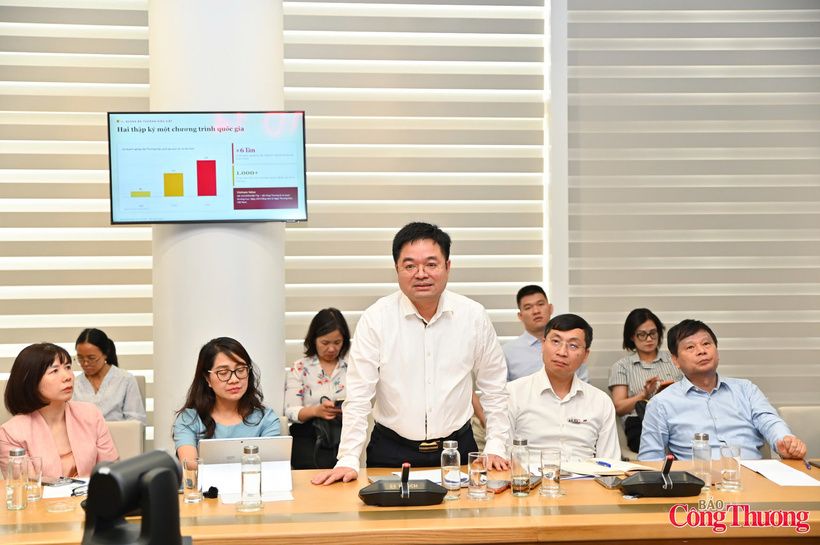
Editor-in-Chief of Newspaper of Industry and Trade Nguyen Van Minh delivers remarks at the discussion session. Photo: Nam Nguyen
To enable the press to truly become a pioneering force, Nguyen Van Minh proposed six groups of solutions built around two pillars and one common foundation.
Regarding the pillar of brand promotion, he outlined three priorities. First, institutionalizing national brand communications through the development of a strategic program with clear objectives, stable resources and a unified coordinating mechanism, linked to the goal of placing Vietnam among the top three ASEAN countries and the world’s top 30 nations in soft power by 2045.
Second, building multilingual external communications channels that effectively target international audiences.
Third, mastering data journalism and digital technologies through expanded use of infographics, long-form articles, videos, podcasts, artificial intelligence and big data, while establishing tools to measure the effectiveness of brand communications. “If something cannot be measured, it cannot be managed; and if it cannot be managed, it cannot be elevated,” he noted.
Regarding the pillar of safeguarding national interests, he highlighted two priorities. First, leveraging the press as a tool for oversight and social criticism, while firmly combating counterfeit goods, intellectual property infringements, origin fraud and violations in e-commerce, thereby protecting consumers in line with the Law on Protection of Consumer Rights.
Second, accompanying businesses on the front line of trade remedy efforts through early-warning communications, dissemination of regulations and lessons learned from previous cases. From pangasius exports to hot-rolled steel products, the press should work closely with the Trade Remedies Authority of Vietnam and the network of Vietnam Trade Offices abroad so that businesses do not face investigations alone.
Importantly, one task should support both pillars: strengthening connections among ministries, media agencies, associations and enterprises. This includes coordination among key media organizations, such as the Vietnam Value section of Nhan Dan Newspaper, together with industry associations and the business community, to create a unified communications network and avoid fragmented efforts, in line with the principle of harnessing collective strength.
According to Nguyen Van Minh, there is a common perception that brand promotion is solely the responsibility of businesses. Viewed more broadly, however, it is also the responsibility of the nation, with the press playing an indispensable role. Every successful Vietnamese brand represents another milestone enhancing Vietnam’s reputation on the global economic map. Every time national interests are safeguarded, Vietnamese values are preserved. Every piece of truthful, objective and responsible information disseminated by the press contributes meaningfully to both goals.
“Eighty-one years ago, President Ho Chi Minh aspired to see a prosperous national economy. Today, Vietnam possesses a national brand valued at USD 519.6 billion and an import-export economy worth USD 930.05 billion. The task now is to transform that potential into a stronger voice while ensuring that this potential is not eroded,” Nguyen Van Minh emphasized.
He affirmed that, drawing upon the 101-year tradition of Vietnam’s revolutionary press, journalists in the industry and trade sector clearly understand that promoting Vietnam’s brand and safeguarding national interests are inseparable tasks. They represent both the responsibility and the mission of the press.
“President Ho Chi Minh once said something that continues to guide economic journalists today: ‘Culture lights the way for the nation.’ A strong brand is, first and foremost, a cultural story that is told well, and no one tells the story of Vietnamese products more persistently than the press,” said Nguyen Van Minh, Editor-in-Chief of the Newspaper of Industry and Trade.
MoIT delegation led by Deputy Minister Truong Thanh Hoai worked with Quang Ninh to review the revised PDP8 and accelerate key power and industrial projects.
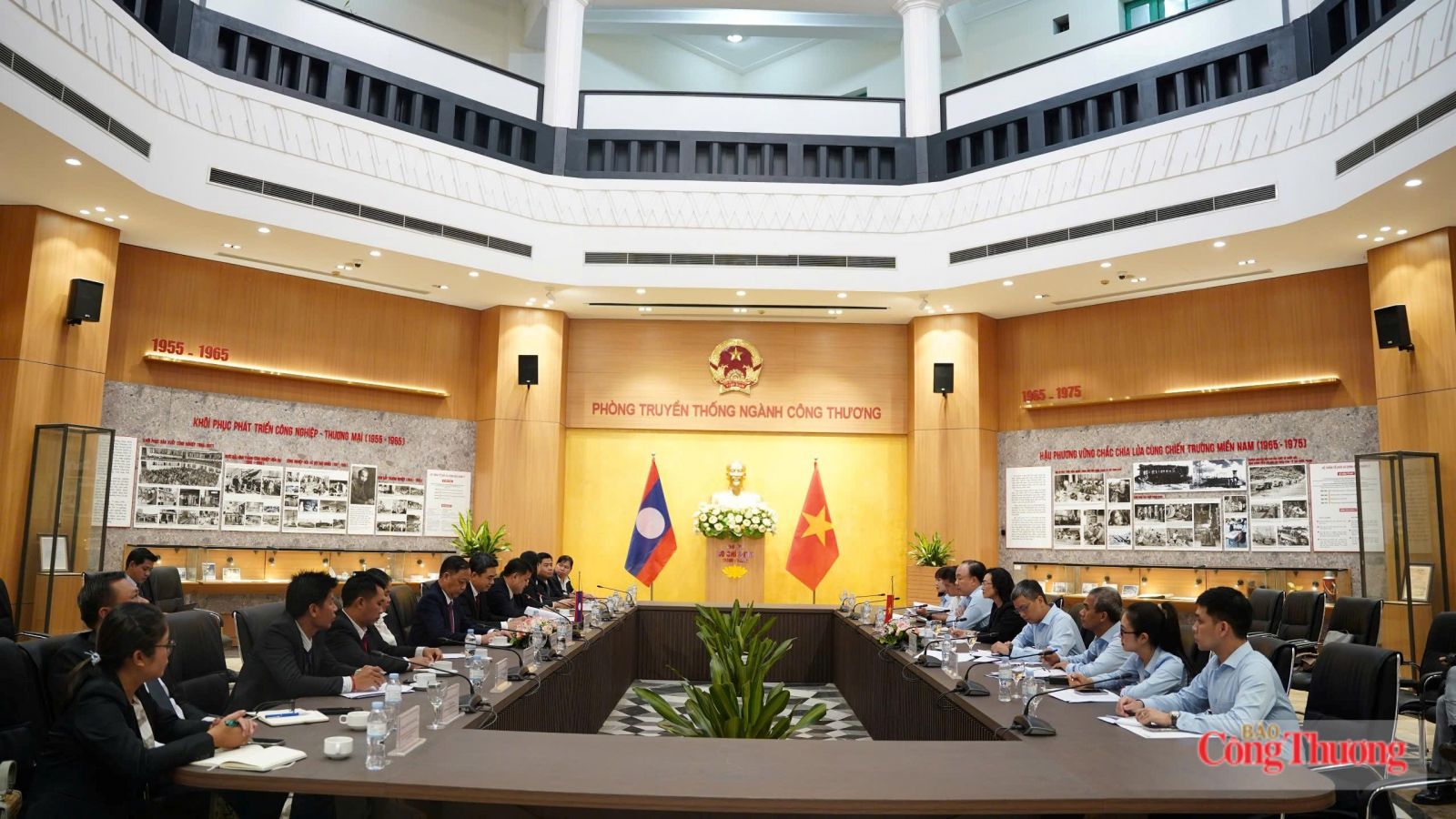
Vietnam and Laos exchanged experience on inspection, examination and domestic market management while reaffirming commitment to deepen bilateral cooperation and tie.
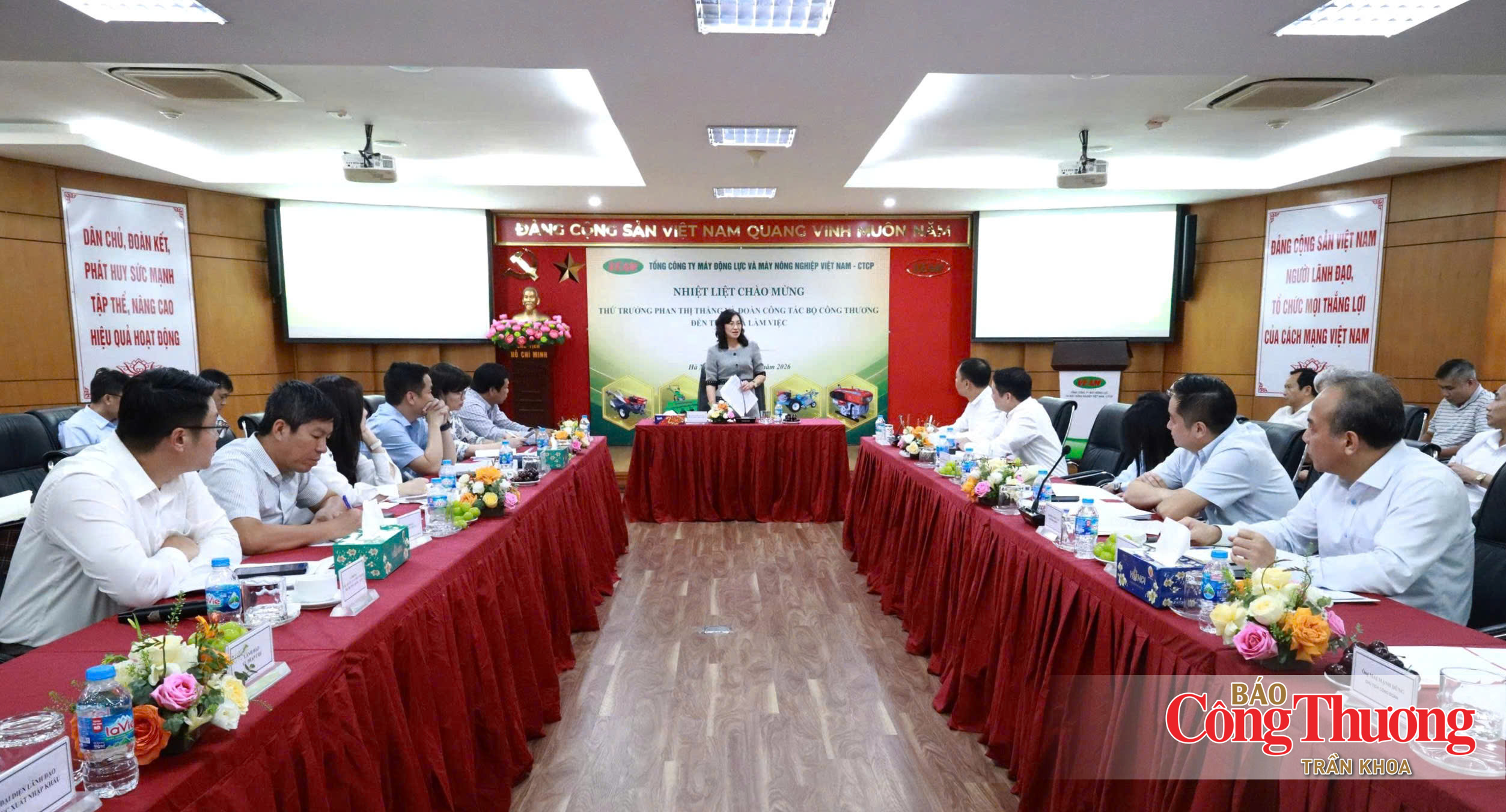
Deputy Minister Phan Thi Thang firmly urged VEAM to accelerate restructuring, boost capital efficiency, and invest in science and technology to develop new products.
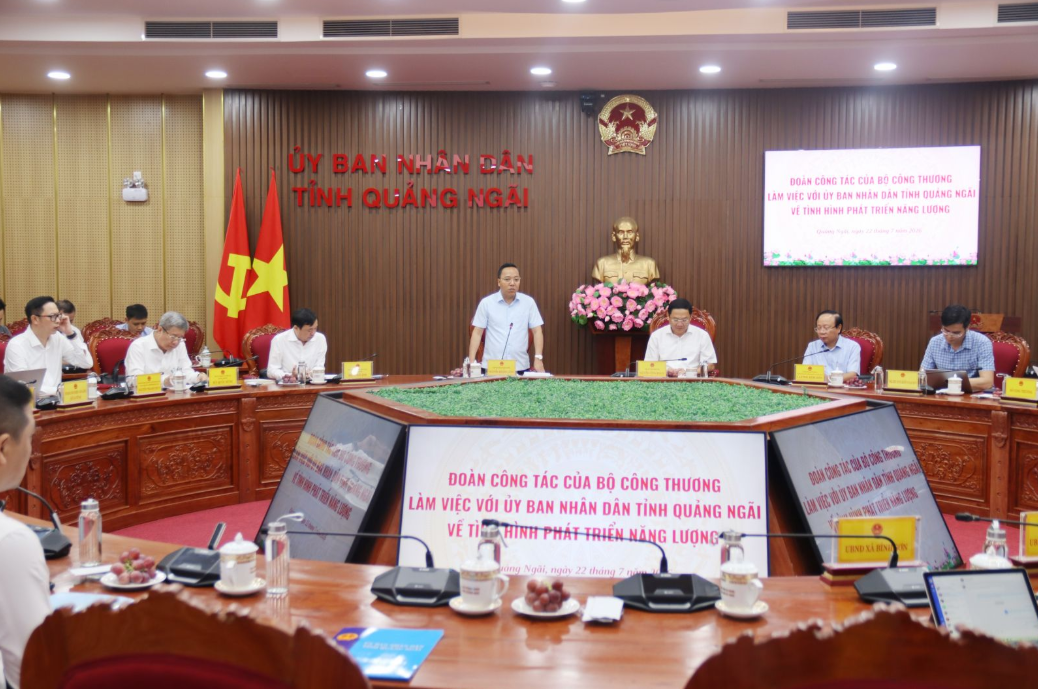
Deputy Minister Nguyen Hoang Long works with Quang Ngai to review key energy projects, address bottlenecks and accelerate implementation under national energy plans
MoIT delegation led by Deputy Minister Truong Thanh Hoai worked with Quang Ninh to review the revised PDP8 and accelerate key power and industrial projects.
Vietnam and Laos exchanged experience on inspection, examination and domestic market management while reaffirming commitment to deepen bilateral cooperation and tie.
Deputy Minister Phan Thi Thang firmly urged VEAM to accelerate restructuring, boost capital efficiency, and invest in science and technology to develop new products.
Deputy Minister Nguyen Hoang Long works with Quang Ngai to review key energy projects, address bottlenecks and accelerate implementation under national energy plans