On the morning of September 28, the National Assembly Standing Committee held the first Conference of Full-time National Assembly Deputies of the 16th National Assembly.
The conference was held to discuss and comment on 17 important draft laws expected to be submitted to the National Assembly at its second session. Politburo member and National Assembly Chairman Tran Thanh Man chaired the conference.
Attending the conference were Politburo member and Permanent Vice Chairman of the National Assembly Do Van Chien; members of the Party Central Committee, including Vice Chairmen of the National Assembly Nguyen Hong Dien and Nguyen Thi Hong, Deputy Prime Minister Nguyen Van Thang, Secretary General of the National Assembly and Chairman of the National Assembly Office Le Quang Manh, Vice President and Secretary General of the Presidium of the Central Committee of the Viet Nam Fatherland Front Ha Thi Nga, and Minister of Finance Ngo Van Tuan; along with representatives of National Assembly agencies, ministries, central-level agencies, and full-time National Assembly deputies.
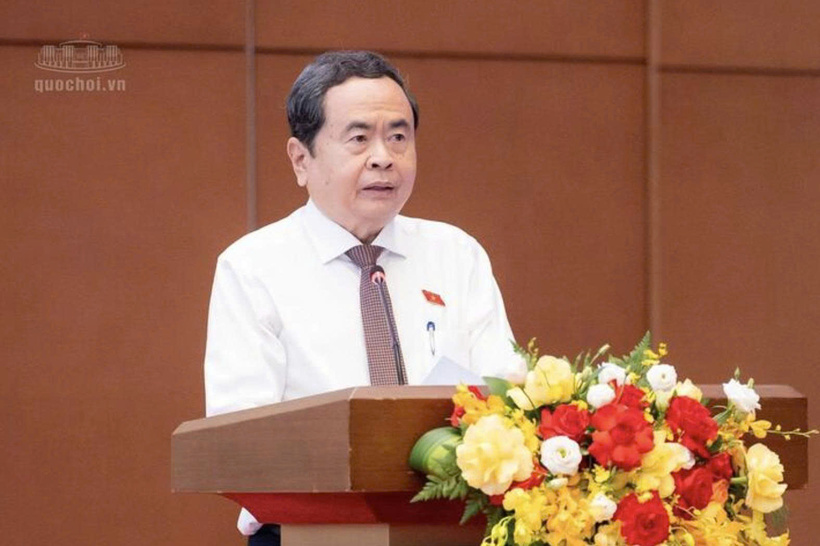
National Assembly Chairman Tran Thanh Man delivers opening remarks at the conference. Photo: Quochoi.vn
45 draft laws and resolutions expected to be considered and adopted
In his opening remarks, National Assembly Chairman Tran Thanh Man said that there is little time left before the second session of the 16th National Assembly, while the legislative workload is substantial.
2026 is the first year of implementing the Resolution of the 14th National Party Congress. Major policies on science and technology, innovation, digital transformation, international integration, private-sector development, and reform of lawmaking and law enforcement are being urgently institutionalized.
From the outset of its tenure, the 16th National Assembly has handled a large legislative workload. At its second session alone, the National Assembly is expected to consider and adopt 45 draft laws and normative resolutions, many of which have broad scopes and directly affect the organizational structure, investment environment, production and business activities, as well as the rights and legitimate interests of people and businesses.
“The workload is substantial and the timeline is tight, but quality must not be compromised. The faster we work, the more carefully we must ensure soundness; the more laws we amend, the more we must ensure systemic consistency; and the stronger the decentralization and delegation of authority, the clearer responsibilities must be and the better power must be controlled,” the National Assembly Chairman emphasized.
According to Chairman Tran Thanh Man, all 17 draft laws under discussion at the conference are difficult and complex, with some issues still drawing divergent views. Therefore, the Conference of Full-time National Assembly Deputies must truly serve as a “quality filter” before the draft laws are submitted to the National Assembly.
Suggesting key areas for discussion, the National Assembly Chairman said that the legislative process must first focus on policy quality rather than the number of provisions. Each draft law must answer fundamental questions, including what practical problem it is intended to address; why the law needs to be amended; what value the new policy will create; who will be affected; what compliance costs will arise; where implementation resources will come from; and who will bear ultimate responsibility.
Deputies should focus their discussions on policies that remain subject to differing views, issues with major impacts on people and businesses, as well as new mechanisms that have no precedent or have not yet been adequately tested.
The second requirement set out by the National Assembly Chairman is to demonstrate a new legislative mindset. Laws should focus on matters falling under the authority of the National Assembly and establish principles that are stable, while frequently changing issues should be assigned to the appropriate level of authority to ensure flexibility in administration.
However, Chairman Tran Thanh Man noted that distinguishing between legislation and regulation does not mean shifting difficult issues to decrees and circulars. Matters concerning human rights, citizens’ rights, business conditions, resource allocation, the organization of state power and the responsibilities of state agencies must be specified in laws. Conversely, laws should not contain excessive technical procedures, professional processes or provisions that are subject to frequent change.
“Laws should be shorter but not weaker in policy substance; contain fewer provisions but clearly define responsibilities; and be more stable while remaining sufficiently adaptable to practical conditions,” the National Assembly Chairman said.
According to Chairman Tran Thanh Man, the law must keep pace with life, but keeping pace does not mean “chasing after life” by continuously amending laws.
Clear positions, clear arguments and clear solutions
The third requirement is to make laws with a systemic mindset, particularly when the National Assembly considers multiple closely interconnected draft laws during the same session.
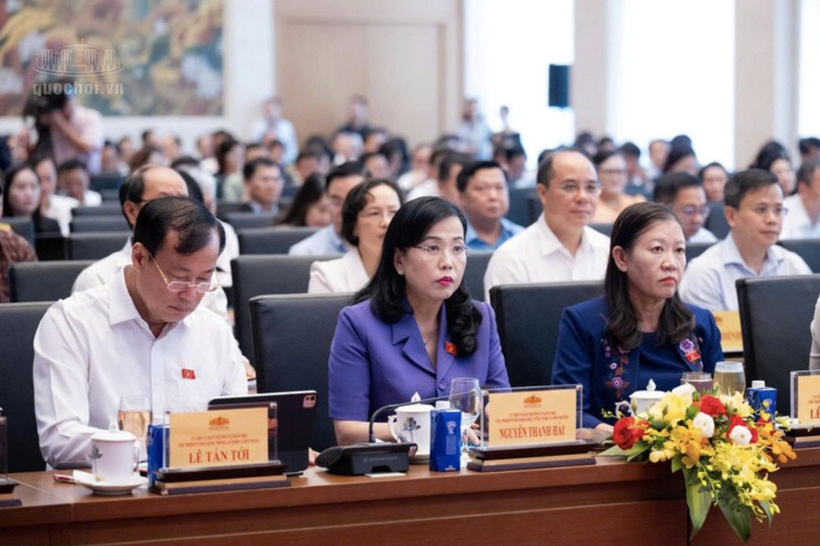
Delegates attend the conference. Photo: Quochoi.vn
The National Assembly Chairman called for thorough reviews to ensure consistency among draft laws in terms of concepts, authority, procedures, decentralization and delegation of powers, land, finance, data and effective dates.
“We must not remove a bottleneck in one law only to create another bottleneck in another. The same issue must not be regulated differently in different laws, and people and businesses must not be left to determine for themselves which provision takes precedence,” the National Assembly Chairman noted.
According to Chairman Tran Thanh Man, a sound legal system requires not only individual laws to be sound but also requires those laws to operate together within a consistent framework.
The fourth requirement is to view regulations from an implementation perspective, as a law does not end when the National Assembly votes to adopt it. The value of a law is ultimately demonstrated when it is put into practice.
Therefore, each provision must be carefully assessed in terms of the implementing entities, methods of implementation, resources, data and responsibilities, while also determining whether it would create additional procedures or conditions for people and businesses.
In particular, draft laws must be consistent with the two-tier local government model and the requirement to further promote decentralization and delegation of authority.
“Decentralization is not simply about transferring tasks to lower levels; authority, resources, data and responsibilities must be transferred in a synchronized manner,” the National Assembly Chairman emphasized.
As the fifth requirement, Chairman Tran Thanh Man called for further enhancing the role of full-time National Assembly deputies. He said he expected every opinion expressed at the conference to go beyond wording and reflect the results of studying the dossiers, comparing them with practical realities and considering each draft law within the broader legal system.
The National Assembly Chairman urged deputies to engage in frank discussions and focus directly on issues where differing views remain, with “clear positions, clear arguments and clear solutions,” while clearly identifying which draft laws are ready to be submitted to the National Assembly for consideration and adoption and which require further improvement.
Immediately after the conference, the drafting agencies and agencies in charge of appraisal must urgently incorporate feedback and finalize the dossiers. Explanatory reports must clearly state which opinions have been incorporated, which have not, and the reasons.
Based on these requirements, the National Assembly Chairman called for a consistent approach to lawmaking throughout the 16th National Assembly’s tenure.
“The National Assembly does not make laws simply to complete its legislative agenda. It makes laws to address practical issues, protect the legitimate rights and interests of the people, remove bottlenecks, unlock resources and pave the way for development,” Chairman Tran Thanh Man stated.
According to the National Assembly Chairman, the ultimate measure of lawmaking is not how many laws are adopted, but whether, after laws are enacted, the state apparatus operates more effectively; whether people and businesses face greater convenience; whether social resources are unlocked; and whether national governance capacity is enhanced.
“A good law must be sound in policy, rigorous in process, consistent within the legal system and smooth in implementation,” the National Assembly Chairman emphasized.
Chairman Tran Thanh Man expressed his confidence that, with the intellect, experience, mettle and sense of responsibility of full-time National Assembly deputies, the conference would make the best possible preparations for the second session while establishing a foundation for a proactive, professional, disciplined and substantive legislative term.
Polish Prime Minister Donald Tusk will pay an official visit to Viet Nam from October 24 to 26 as the bilateral trade continues to grow, creating opportunities for deeper cooperation.
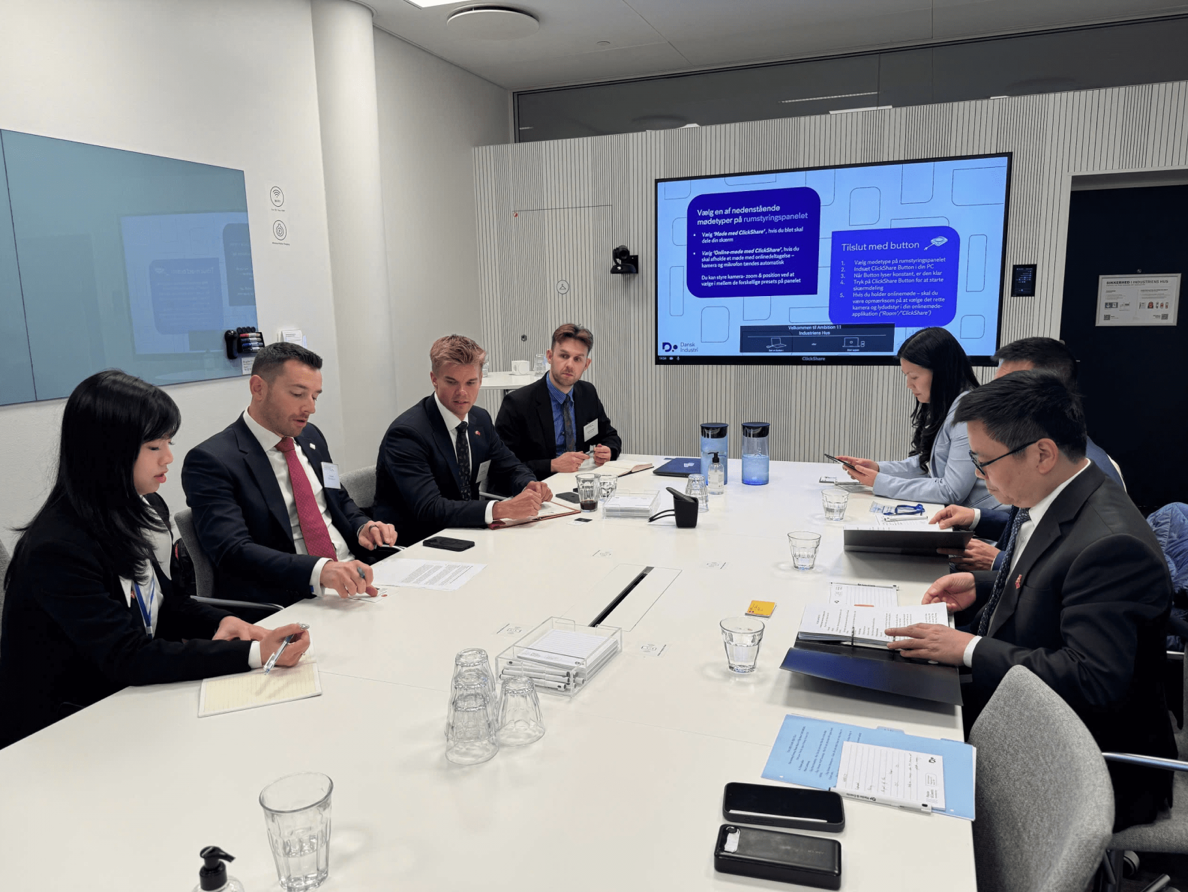
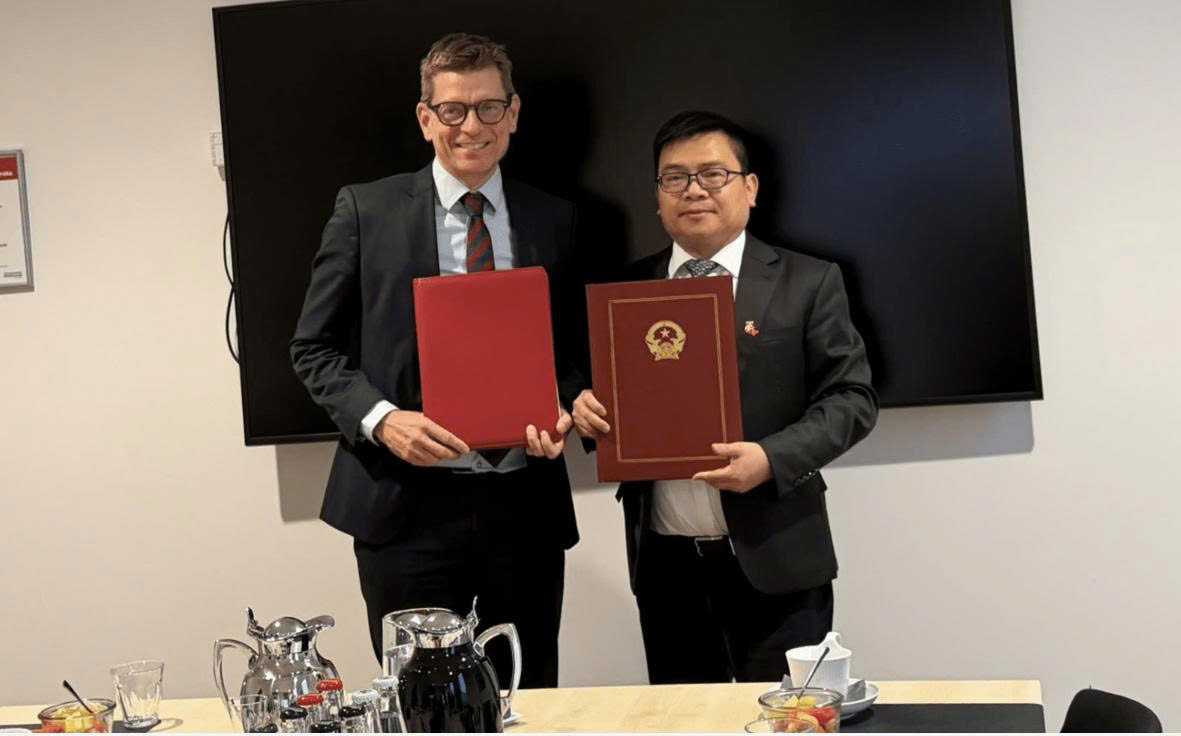
Deputy Minister Truong Thanh Hoai met with LEGO and Carlsberg in Denmark on October 20 to discuss green investment and sustainable manufacturing in Viet Nam.
For more than three decades, Ms. Dang Thi Thanh Huong has quietly shaped the legacy of Dong Phuong Cake & Confectionery, a brand rooted in tradition, craftsmanship.
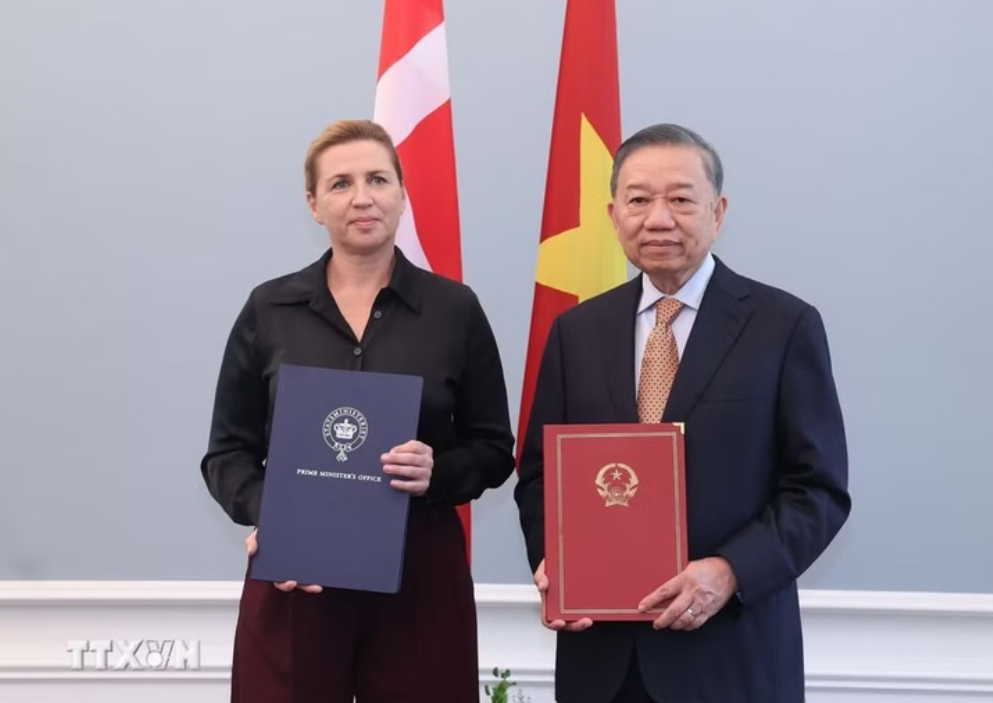
Viet Nam and Denmark have signed an MoU on energy cooperation to strengthen bilateral ties and advance collaboration in renewable energy and the green transition.
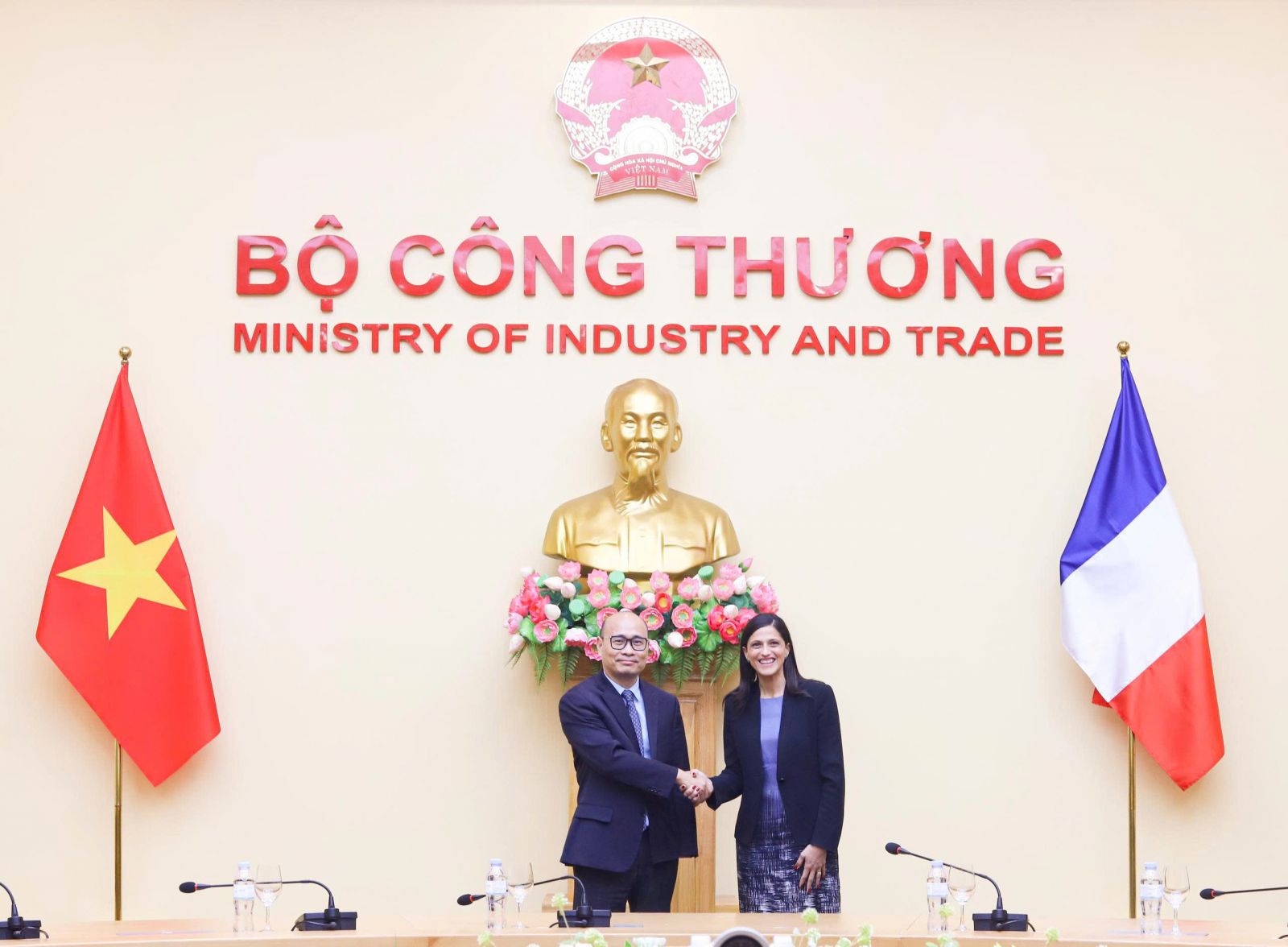
Deputy Minister Luong Hoang Thai met French Minister Delegate Eleonore Caroit on October 19 to discuss ways to strengthen Viet Nam - France cooperation.
Polish Prime Minister Donald Tusk will pay an official visit to Viet Nam from October 24 to 26 as the bilateral trade continues to grow, creating opportunities for deeper cooperation.
Deputy Minister Truong Thanh Hoai met with LEGO and Carlsberg in Denmark on October 20 to discuss green investment and sustainable manufacturing in Viet Nam.
Viet Nam and Denmark have signed an MoU on energy cooperation to strengthen bilateral ties and advance collaboration in renewable energy and the green transition.
Deputy Minister Luong Hoang Thai met French Minister Delegate Eleonore Caroit on October 19 to discuss ways to strengthen Viet Nam - France cooperation.
The Viet Nam Economic News respectfully presents the full text of the Joint Statement on the Establishment of a Comprehensive Strategic Partnership between Viet Nam and Denmark.