Prof. Dr. Dang Dinh Dao stressed that economic diplomacy has helped expand Viet Nam's development space, elevate the country's standing, and create momentum for growth in the new period.
On the occasion of the 81st anniversary of National Day of the Socialist Republic of Viet Nam (September 2, 1945 - September 2, 2026), Viet Nam Economic News had an interview with Meritorious Teacher, Prof. Dr. Dang Dinh Dao, former Director of the Institute of Economic and Development Research, National Economics University, about the contributions of economic diplomacy to the international integration process, the elevation of Viet Nam's economic standing over more than four decades of Doi Moi, and the requirements set out for the new period of development.
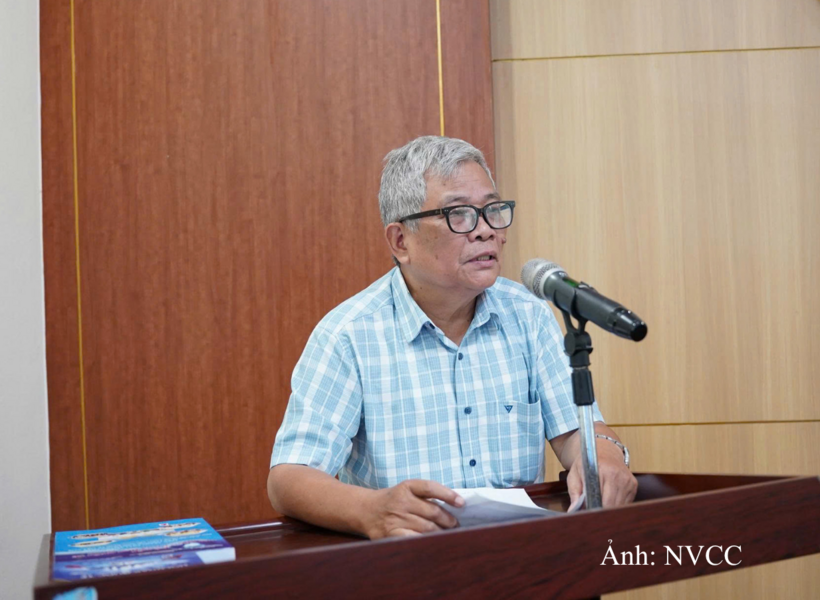
Meritorious Teacher, Prof. Dr. Dang Dinh Dao, former Director of the Institute of Economic and Development Research, National Economics University. Photo: Provided by the interviewee
Economic diplomacy paves the way for a shift in standing
- Eighty-one years after gaining independence, Viet Nam has established diplomatic relations with nearly 200 countries and territories, joined more than 70 international organizations, and signed and implemented 17 free trade agreements (FTAs). How would you assess these outstanding achievements?
Prof. Dr. Dang Dinh Dao: Looking at the figures, Viet Nam's development achievements over the past four decades are truly impressive. In 1986, when the Doi Moi renovation process began, the country's total foreign trade turnover was just under USD 3 billion, of which exports accounted for about USD 789 million. By 2026, total import-export turnover is expected to reach around USD 1,060 billion, bringing Viet Nam close to the group of economies with the world's largest trade scale. This reflects a strong shift in Viet Nam's standing within the global economy.
From an economy with a once-limited level of international integration, Viet Nam has now established diplomatic relations with most countries in the world. As of January 2026, Viet Nam had 15 Comprehensive Strategic Partnerships. The FTAs Viet Nam has joined currently cover more than 60 economies, accounting for about 90% of global GDP.
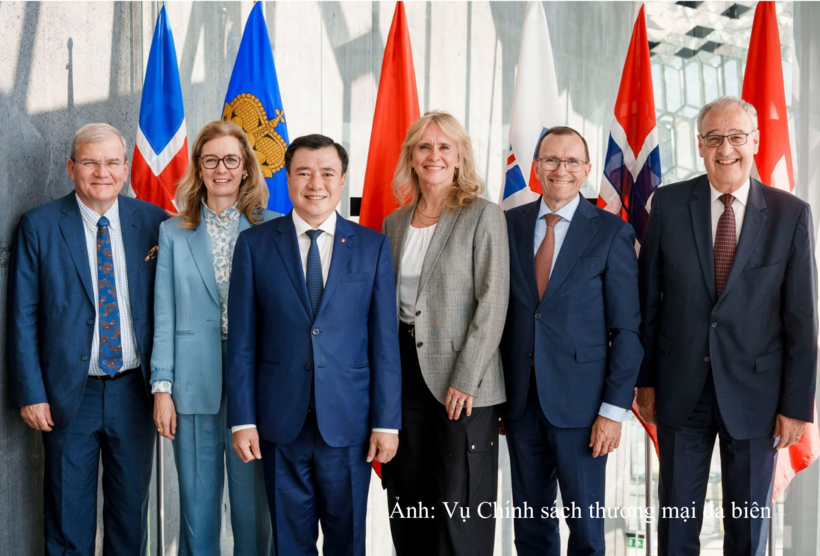
A notable recent milestone came in July 2026, when Viet Nam and the European Free Trade Association (EFTA) - comprising Switzerland, Norway, Iceland and Liechtenstein - issued a joint statement concluding negotiations on the Viet Nam - EFTA Free Trade Agreement after nearly 14 years of pursuit. This outcome paves the way for Viet Nam to raise its total number of FTAs to 18, while completing another important link in its network of economic and trade ties with Europe.
Deputy Minister of Industry and Trade Nguyen Sinh Nhat Tan led Viet Nam's negotiating delegation to the EFTA Ministerial Meeting in Iceland. Photo: Multilateral Trade Policy Department
However, the achievements of the integration process are not reflected solely in import-export growth or the expansion of external markets. Another important dimension is the strong development of the domestic market. While total retail sales of goods and consumer service revenue were still modest in the early years of Doi Moi, they are expected to reach about VND 7,880 trillion by 2026. Together with a population that has surpassed 100 million, Viet Nam now possesses a large domestic market with increasingly strong development potential.
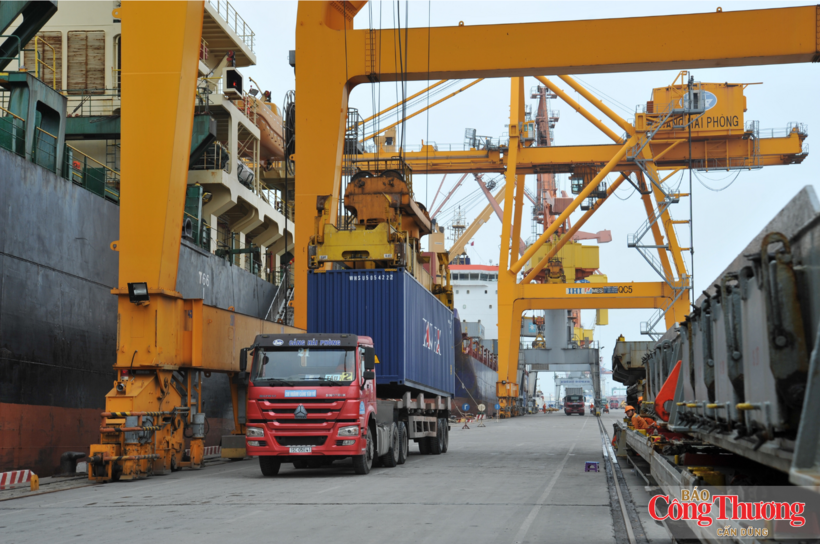
In addition, trade scale or the number of FTAs is not the only measure of success. The effectiveness of FTA utilization and the competitiveness of the logistics system are the indicators that truly reflect the quality of integration. At present, Viet Nam's logistics costs remain relatively high compared with the world average and many countries in the region. Improving logistics efficiency has therefore been identified as one of the key tasks for the coming period. Under Decision No. 2229/QD-TTg dated October 9, 2025, issued by the Prime Minister approving the Strategy for the Development of Viet Nam's Logistics Services for the 2025-2035 period with a vision to 2050, the target is to gradually reduce the proportion of logistics costs to about 12-15% of GDP during the 2025-2035 period.
Looking back on the 81-year journey since the country gained independence, especially the 40 years of Doi Moi, I believe the achievements Viet Nam has attained are truly enormous. From a small-scale economy with limited integration capacity, Viet Nam has risen to become one of the world's most open economies. This is the result of the right development path, an increasingly deep and broad process of international integration, and the pioneering, resource-connecting role played by external affairs and economic diplomacy over many decades.
Milestones that laid the foundation for the integration process
- Professor, which milestones and factors have been decisive for Viet Nam's gradual rise in international standing?
Prof. Dr. Dang Dinh Dao: In my view, this process should be seen as a continuous flow, beginning with shifts in development thinking even before Doi Moi started in 1986. One notable milestone was Decision No. 25-CP, issued by the Government Council in 1981, on a number of policies and measures to promote the autonomy of state-owned enterprises in production, business operations and finance. This can be regarded as an important pilot step that helped form the conceptual groundwork for the later Doi Moi process.
However, the true turning point came in 1991, when the 7th National Party Congress adopted the Platform for National Construction in the Transitional Period to Socialism, while affirming the policy that "Viet Nam wants to be a friend to all countries in the world community, striving for peace, independence and development." This statement reflected a renewal in foreign policy thinking and opened a period of increasingly deep and broad integration for the country.
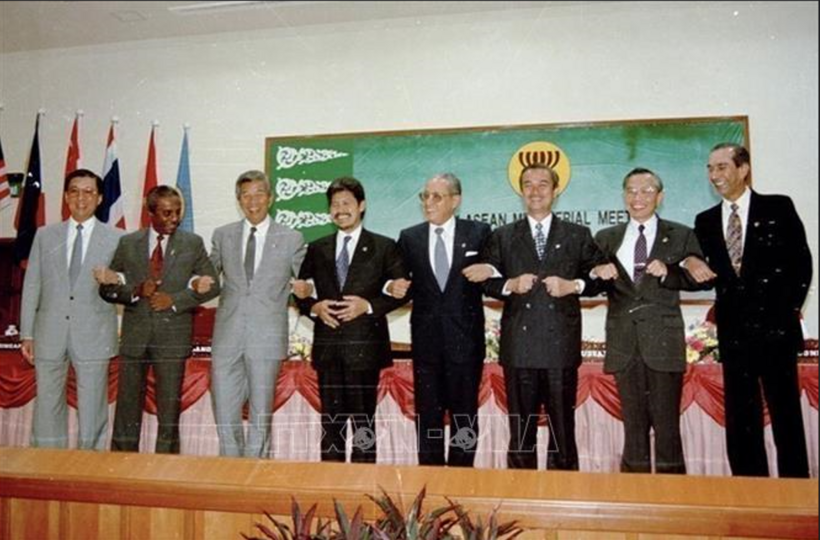
Building on this foundation, Viet Nam gradually carried out its roadmap for opening up and integration, marked by important milestones such as joining ASEAN and normalizing relations with the US in 1995, implementing the Viet Nam-US Bilateral Trade Agreement (BTA) from 2001, joining the World Trade Organization (WTO) in 2007, and subsequently a series of new-generation free trade agreements such as the CPTPP, the EVFTA and the RCEP. These steps created momentum for economic growth while helping Viet Nam accumulate competitiveness and integration experience and gradually raise its standing on the international stage.
Minister of Foreign Affairs Nguyen Manh Cam (second from right), the ASEAN Secretary-General and ASEAN foreign ministers at the meeting admitting Viet Nam as the seventh official member of ASEAN, on July 28, 1995, in Bandar Seri Begawan, the capital of Brunei. (Photo: VNA)
In recent years, the role of economic diplomacy has continued to be strongly affirmed. Directive No. 15-CT/TW dated August 10, 2022, issued by the Secretariat, identifies economic diplomacy as a fundamental, central task of Viet Nam's diplomacy in serving national development. Subsequently, Resolution No. 59-NQ/TW dated January 24, 2025, issued by the Political Bureau on international integration in the new situation, stresses the need to promote international integration as a strategic driving force, effectively harnessing external resources and favorable conditions to build an independent, self-reliant and resilient economy.
If I had to identify the decisive factors, I would point to three: first, the courage to renew foreign policy thinking and to boldly declare friendship with all nations, breaking the encirclement and isolation; second, an approach with a clear roadmap and steps, opening up sector by sector and commitment level by commitment level, neither rushed nor delayed; and third, the sustained contribution of the trade and logistics sector in turning the market opportunities opened up by diplomacy into real flows of goods and capital, both in import-export activities and in the development of the domestic market.
Creating new momentum to achieve the double-digit growth target
- To help achieve the double-digit growth target, what new momentum do you think Viet Nam's economic diplomacy needs to create in order to expand the country's development space and continue raising its economic standing?
Prof. Dr. Dang Dinh Dao: In my view, the requirement for the coming period is to shift strongly from extensive development to intensive development. This is also an important condition for sustainably achieving the double-digit growth target while continuing to raise Viet Nam's economic standing on the international stage.
First, economic diplomacy needs to help drive the transformation of the growth model toward a green, sustainable direction with a strong capacity to adapt to fluctuations in the global economic environment. Major markets and new-generation free trade agreements are increasingly setting stringent requirements related to sustainable development, green transition, environmental and labor standards, and traceability. Economic diplomacy therefore needs to play a pioneering role in grasping trends, participating in shaping new cooperation frameworks, and supporting businesses in building the capacity to meet international standards.
Second, both growth drivers - the international market and the domestic market - need to be tapped effectively. With a population of more than 100 million and rising purchasing power, the domestic market is becoming an important development resource. Economic diplomacy should not only aim to expand export markets but also help attract capital, technology and modern management know-how to strengthen the domestic market, and enhance the linkage between production, distribution and consumption in line with global value chain standards.
Economic diplomacy helps expand market space, attract external resources and create conditions for Vietnamese businesses to participate more deeply in global value chains.
Third, the effectiveness of utilizing signed free trade agreements needs to be improved. After the phase of expanding the FTA network, the current requirement is to shift the focus toward improving implementation quality, increasing the rate of tariff preference utilization, and better meeting rules of origin, technical standards and trade defense requirements. In this process, MoIT's role needs to continue to be promoted through negotiation work and the implementation of international commitments, while supporting businesses in accessing market information and effectively seizing the opportunities offered by each agreement.
Fourth, trade and logistics infrastructure and institutions need to be developed in sync. A modern logistics system not only helps reduce costs and enhance business competitiveness but also determines the ability to translate the opportunities brought by integration and economic diplomacy into substantive growth results.
Fifth, the quality of foreign investment attraction needs to keep improving in a selective direction, prioritizing high-tech, innovative projects that involve technology transfer and have the capacity to link up with the domestic business sector. This provides the foundation for Vietnamese businesses to gradually participate more deeply in global value chains, increase value-added content and enhance national competitiveness.
- Thank you very much!
Prof. Dr. Dang Dinh Dao stressed that, in the coming period, the new momentum of economic diplomacy needs to aim at improving growth quality, strengthening the economy's internal capacity, and bringing the international integration process to a deeper, more substantive and more effective level.
MoIT is advancing the Energy Efficiency Promotion Fund to mobilize financial resources and support greater investment in energy efficiency in Viet Nam.
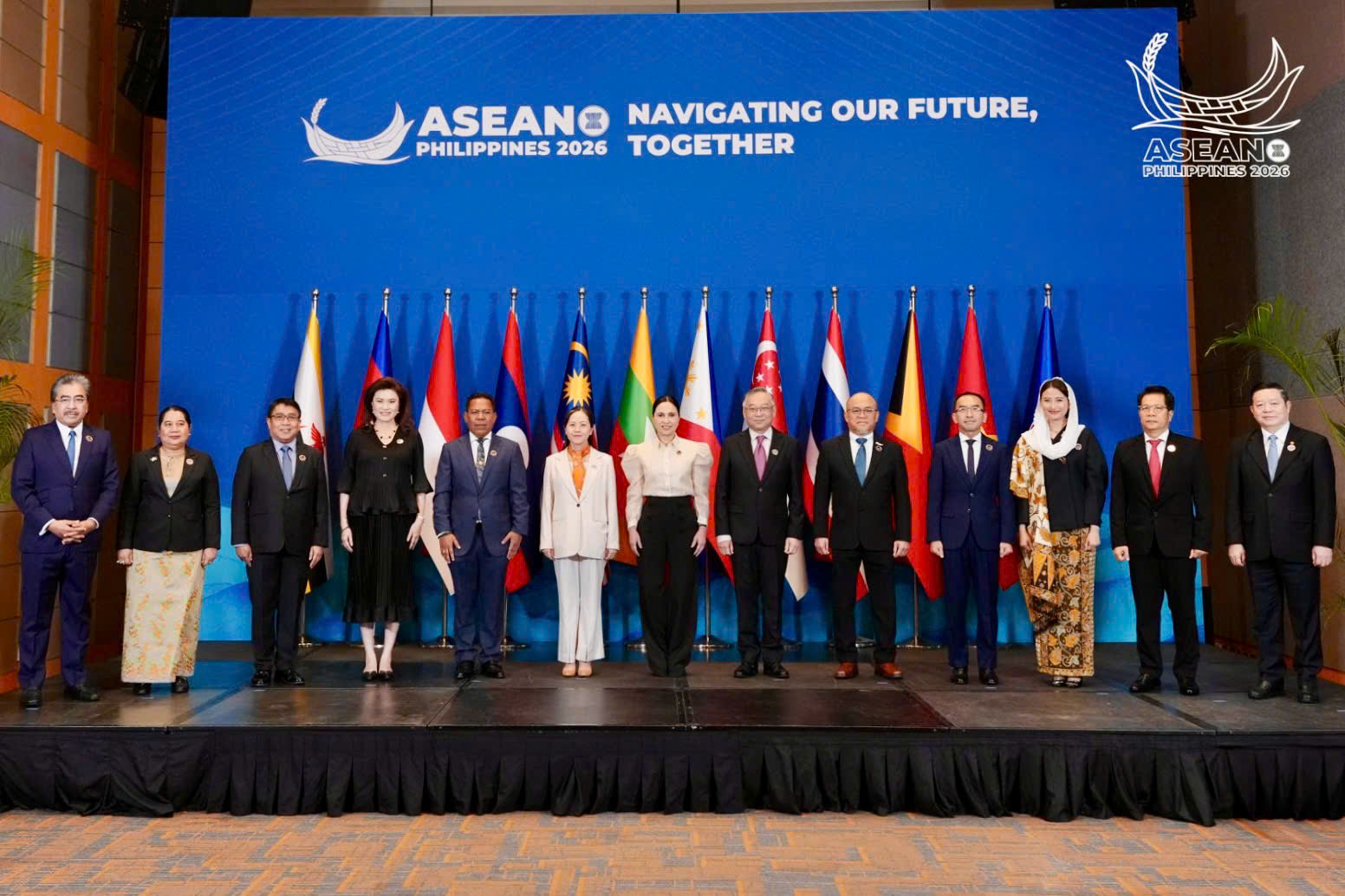
The ASEAN Economic Ministers’ Meeting highlighted positive progress in economic integration, trade, digital economy and stronger connectivity among ASEAN economies.
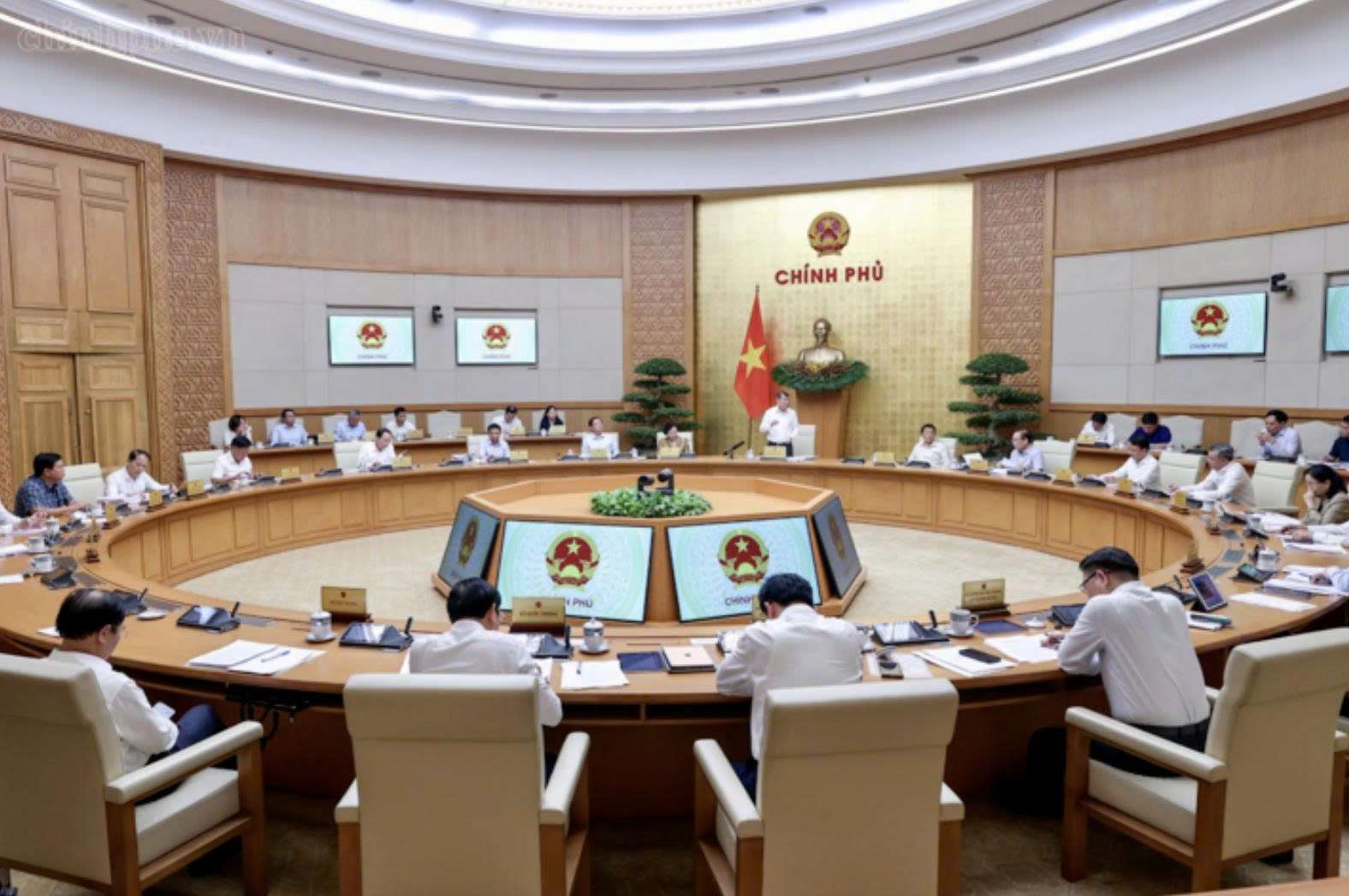
The Prime Minister has asked relevant ministries and agencies to urgently finalize draft laws and resolutions to mobilize resources for socio-economic development.
General Secretary and President To Lam’s attendance and address at UNGA 81 high-level debate are particularly significant as Viet Nam and the UN look ahead to the 50th anniversary of their relations.
The ASEAN Economic Ministers’ Meeting highlighted positive progress in economic integration, trade, digital economy and stronger connectivity among ASEAN economies.
The Prime Minister has asked relevant ministries and agencies to urgently finalize draft laws and resolutions to mobilize resources for socio-economic development.
General Secretary and President To Lam’s attendance and address at UNGA 81 high-level debate are particularly significant as Viet Nam and the UN look ahead to the 50th anniversary of their relations.
A series of projects and planning initiatives are opening up new opportunities to develop underground space, raising expectations for a new “development layer” for Ho Chi Minh City.