|
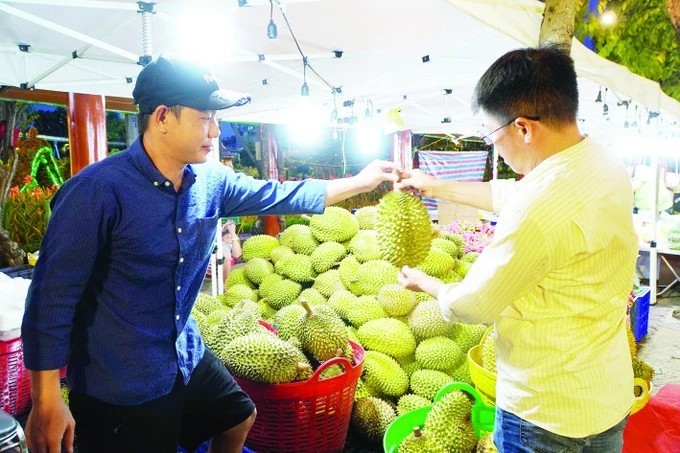
| A farmer from the Mekong Delta province of Tien Giang introduces his durian to a client (Photo: sggp.org.vn) |
According to the Ministry of Agriculture and Rural Development (MARD), the overseas shipments of Vietnamese durian brought home approximately 1.7 billion USD between January and July.
Dang Phuc Nguyen, General Secretary of the Vietnam Fruit and Vegetable Association (Vinafruit), noted that farmers in Mekong Delta provinces such as Tien Giang and Vinh Long have ramped up off-season durian production, significantly boosting output during this seven-month period. Currently, around 50-60% of growing areas in the region are focusing on off-season production.
In addition, unfavourable weather conditions have caused a sharp decline in Thailand’s durian output, creating further opportunities for Vietnam in the market, Nguyen added.
Meanwhile, a substantial volume of durian, particularly from the Central Highlands, will be exported in the remaining months of the year. Data from the MARD’s Department of Crop Production shows that Vietnam now has around 150,000 hectares of the tropical fruit, with more than 75,000 hectares located in the Central Highlands.
Durian is currently grown in the Mekong Delta, southeast, central coastal, and Central Highlands regions. The delta harvests its main crop from April to August, the central coast from April to June, the southeastern region from May to July, and the Central Highlands from July to November.