According to data from the General Department of Customs (GSO), Việt Nam's coffee exports reached 862,400 tonnes by the first half of this month, declining by more than 8 per cent in volume but up 38 per cent in value compared to the same period last year.
This is also a record high compared to the same period in previous years.
Regarding price, Việt Nam's average coffee export price reached $4,275 per tonne in May, up 14 per cent compared to April and up 66 per cent year-on-year.
 |
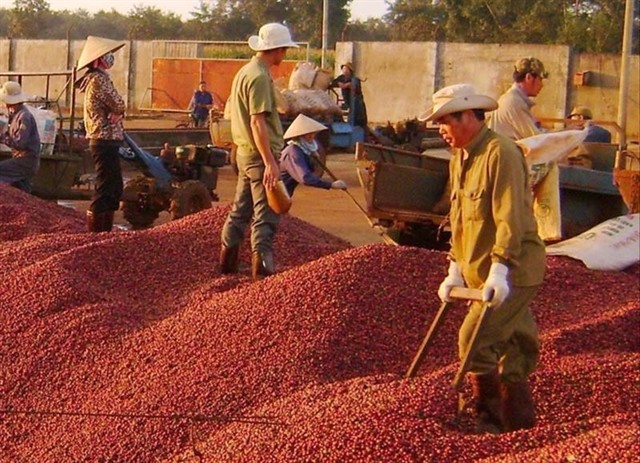
| It is forecasted that coffee output will continue to decrease by about 20 per cent in the upcoming crop year. — Photo vneconomy.vn |
The country's average coffee export price reached $3,475 per tonne in the first five months of the year, up 41 per cent year-on-year.
In the early days of June, the price of Robusta coffee in the domestic market increased compared to the end of May.
According to the Ministry of Agriculture and Rural Development, there is currently very little coffee inventory left in the domestic market.
It is forecast that coffee output will continue to decrease by about 20 per cent in the upcoming crop year due to the recent prolonged hot weather leading to severe drought in the Central Highlands.
The Việt Nam Coffee Cocoa Association (Vicofa) said that coffee prices were currently soaring sharply, therefore, coffee output exported to the world may fall but turnover would still grow.
Vicofa expects coffee exports to earn about $4.5-5 billion this year.