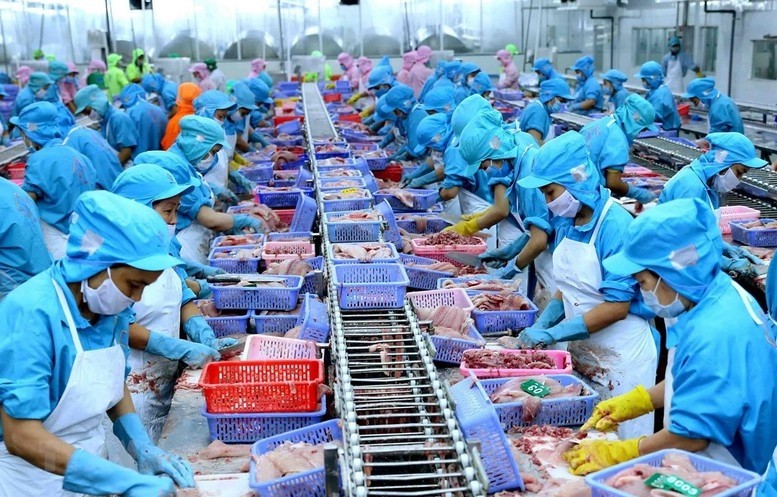
Key export items to the market included wood, seafood, and cashew nuts, reported the MARD.
On the contrary, Vietnam spent US$1.9 billion importing farm products, mainly animal feed, vegetables, and wheat, from the US, up nearly 28% year on year.
MARD Deputy Minister Phung Duc Tien says these figures clearly demonstrate strong growth ahead for sustainable cooperation between the two countries.
According to Tien, Vietnam attaches importance to opening its market for agricultural products with remarkable progress being recorded. Specifically, the US allowed the import of fresh coconuts and pomelos from Vietnam last year, while the Vietnamese side also opened its doors to grapefruit, peaches, and nectarines from the US in July.
The MARD has been completing procedures for other products such as oranges, tangerines, and seedless lemons from the US to enter the country moving forward.
Nguyen Van Long, director of the MARD’s Department of Animal Health, reveals that Vietnam has approved the import of 560 animal products from the US, the largest figure among 26 countries with animal products imported into its market.
Long hopes that the US will create more favourable conditions for the export of Vietnamese animal products to the US market, whilst also sharing its experience in disease control in livestock farming and antibiotic resistance in the future.