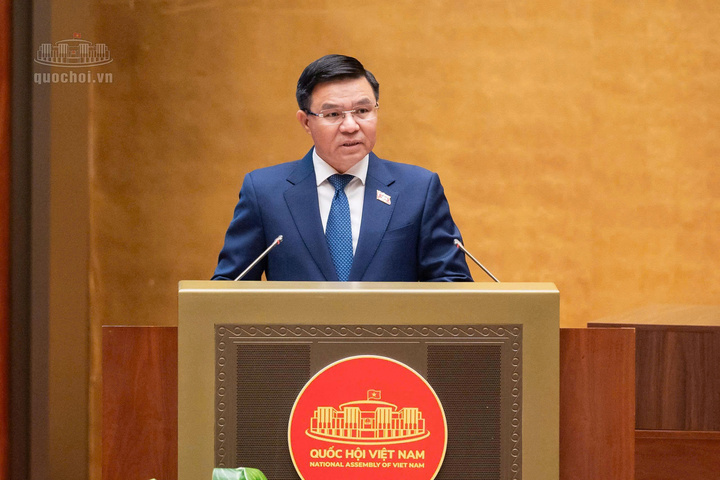
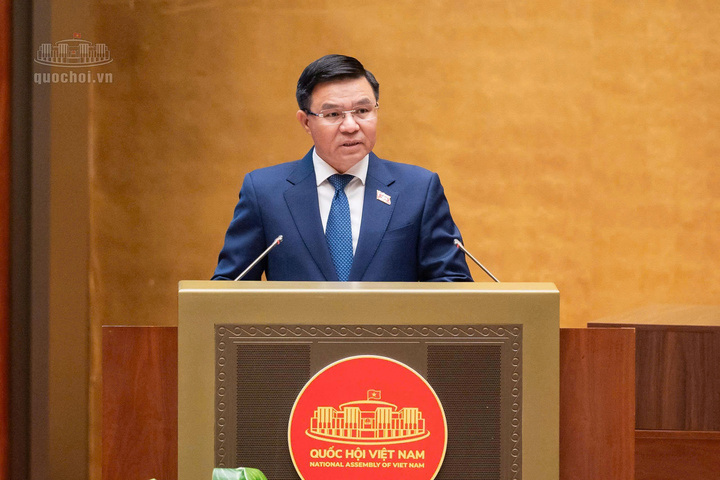
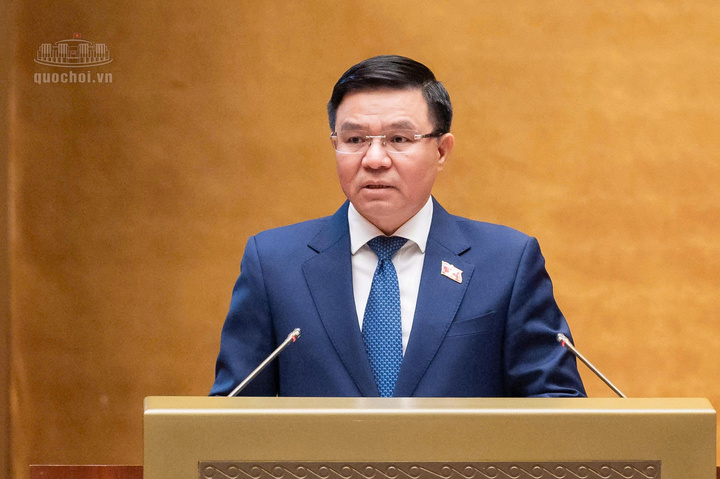
Minister of Industry and Trade Le Manh Hung presents the Government's submission on the draft Law amending and supplementing a number of articles of the Electricity Law
On October 20, at the second session of the 16th National Assembly, Minister of Industry and Trade Le Manh Hung presented the Government's submission on the draft Law amending and supplementing a number of articles of the Electricity Law.
On October 20, at the second session of the 16th National Assembly, Minister of Industry and Trade Le Manh Hung delivered a speech on the draft Law amending and supplementing a number of articles of the Electricity Law.
The Vietnam Economic News presents the full text of his speech:
Distinguished leaders of the Party and State,
Distinguished Chairman of the National Assembly and Vice Chairpersons of the National Assembly presiding over this sitting,
Distinguished members of the National Assembly,
In accordance with the agenda of the second session of the 16th National Assembly, and as authorized by the Prime Minister, I would like to present the Government's submission on the draft Law amending and supplementing a number of articles of the Electricity Law.
Minister of Industry and Trade Le Manh Hung presents the Government's submission on the draft Law amending and supplementing a number of articles of the Electricity Law. Photo: Quochoi.vn
The draft Law has been developed on the basis of three fundamental principles: first, decentralization and delegation of authority commensurate with implementation capacity; second, further streamlining administrative procedures; and third, addressing practical bottlenecks to promote production, business activities and socioeconomic development.
First, regarding the necessity, objectives and guiding principles for developing the draft Law.
From a political perspective, the draft Law seeks to institutionalize the policies and conclusions of the Party Central Committee and the Politburo on ensuring national energy security in conjunction with the objective of achieving double-digit economic growth.
From a legal perspective, the draft Law has been formulated on the basis of the Constitution and Electricity Law No.61/2024/QH15, as amended and supplemented by Laws Nos.94 and 116 of 2025. It also builds upon and further develops the provisions of Resolution No.253/2025/QH15, with a view to ensuring consistency with new legislation on planning, investment and land.
From a practical perspective, the implementation of the revised Power Development Plan VIII and efforts to ensure electricity supply during the 2027 - 2030 period have revealed obstacles relating to planning, investment, renewable energy and electricity pricing that fall within the National Assembly's authority to address. The objective is to establish a legal framework for the development of power generation sources and transmission grids, thereby ensuring the security of electricity supply under evolving circumstances.
Second, regarding the process of drafting and finalizing the proposed Law.
The draft Law has been developed in full compliance with the prescribed procedures and processes. It has been examined by the National Assembly's Committee for Science, Technology and Environment, reviewed by the National Assembly Standing Committee, and discussed at a conference of full-time National Assembly deputies.
Accordingly, the Government has proactively incorporated the opinions and recommendations received, making two major adjustments. First, the preferential application of the sector-specific law, namely the Electricity Law, is limited to investment policy matters concerning electricity projects. Second, the draft does not provide for special mechanisms applicable to urgent electricity infrastructure projects, thereby ensuring the uniform application of construction legislation.
Third, regarding the contents of the draft Law.
The draft Law comprises three articles, focusing on five principal groups of provisions as follows:
First, regarding general matters, the draft Law clarifies the scope of application of special mechanisms for investment policy approval; narrows the scope of State monopoly provisions; provides for selective priorities and incentives according to different types of power generation; and introduces mechanisms to support electricity payments for vulnerable groups.
Second, regarding planning and construction investment, the draft Law stipulates that certain electricity projects are exempt from investment policy approval requirements. It also establishes the winning bid electricity price as the basis for concluding power purchase agreements, thereby limiting subsequent price renegotiations, and provides for the development of power transmission grids through public-private partnerships.
Third, regarding renewable and new energy, the draft Law refines regulations governing the renewable energy certificate market, electricity storage systems and offshore wind power, while introducing the necessary mechanisms to facilitate the development of waste-to-energy generation.
Fourth, regarding licensing, electricity markets and power trading, the draft Law reduces the requirements for obtaining electricity operation licenses and introduces additional exemptions. It also further develops the stages of the competitive electricity market and expands direct power trading.
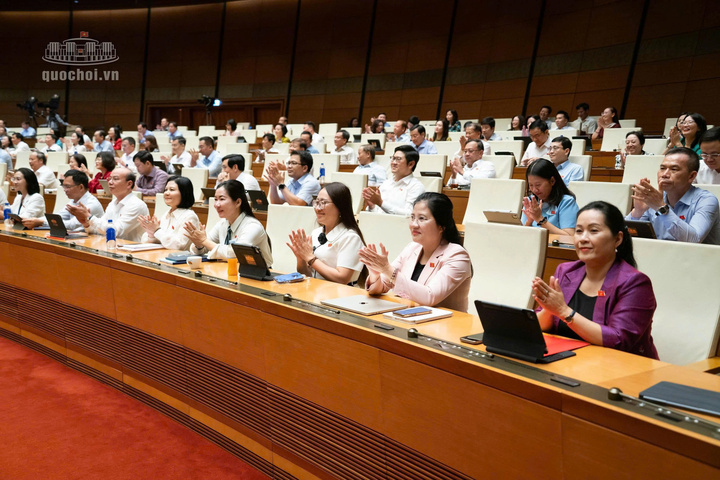
National Assembly deputies attend the session. Photo: Quochoi.vn
Fifth, regarding electricity prices and electricity service charges, the draft Law establishes a roadmap for gradually reducing and ultimately eliminating cross-subsidization among different customer groups. It also clarifies contractual electricity pricing for certain types of power generation and provides for pricing mechanisms to incentivize renewable energy and electricity storage.
Distinguished members of the National Assembly,
The draft Law has been prepared in accordance with the procedures and processes prescribed by law. The drafting process has been conducted openly and transparently, in conformity with the Constitution and applicable laws, without giving rise to additional organizational structures or staffing positions.
The Government will earnestly listen to and incorporate the opinions of National Assembly deputies in order to further refine the draft Law and submit it to the National Assembly for consideration and adoption at this session.
Thank you, distinguished members of the National Assembly, for your attention.
On October 20, at the second session of the 16th National Assembly, Minister of Industry and Trade Le Manh Hung presented the Government's submission on the draft Law amending and supplementing a number of articles of the Electricity Law.
On October 20, Minister Le Manh Hung presented proposed amendments to four laws on commerce, competition, foreign trade management and consumer rights.
Digital skills, AI adoption and online exports are expected to help young entrepreneurs transform their businesses and expand into international markets.
General Secretary of the Communist Party of Vietnam Central Committee and State President To Lam, his spouse and a high-ranking Vietnamese delegation attended a state banquet hosted by King Frederik X and Queen Mary in Copenhagen on the evening of October 19 (local time).
On October 20, at the second session of the 16th National Assembly, Minister of Industry and Trade Le Manh Hung presented the Government's submission on the draft Law amending and supplementing a number of articles of the Electricity Law.
On October 20, Minister Le Manh Hung presented proposed amendments to four laws on commerce, competition, foreign trade management and consumer rights.
General Secretary of the Communist Party of Vietnam Central Committee and State President To Lam, his spouse and a high-ranking Vietnamese delegation attended a state banquet hosted by King Frederik X and Queen Mary in Copenhagen on the evening of October 19 (local time).
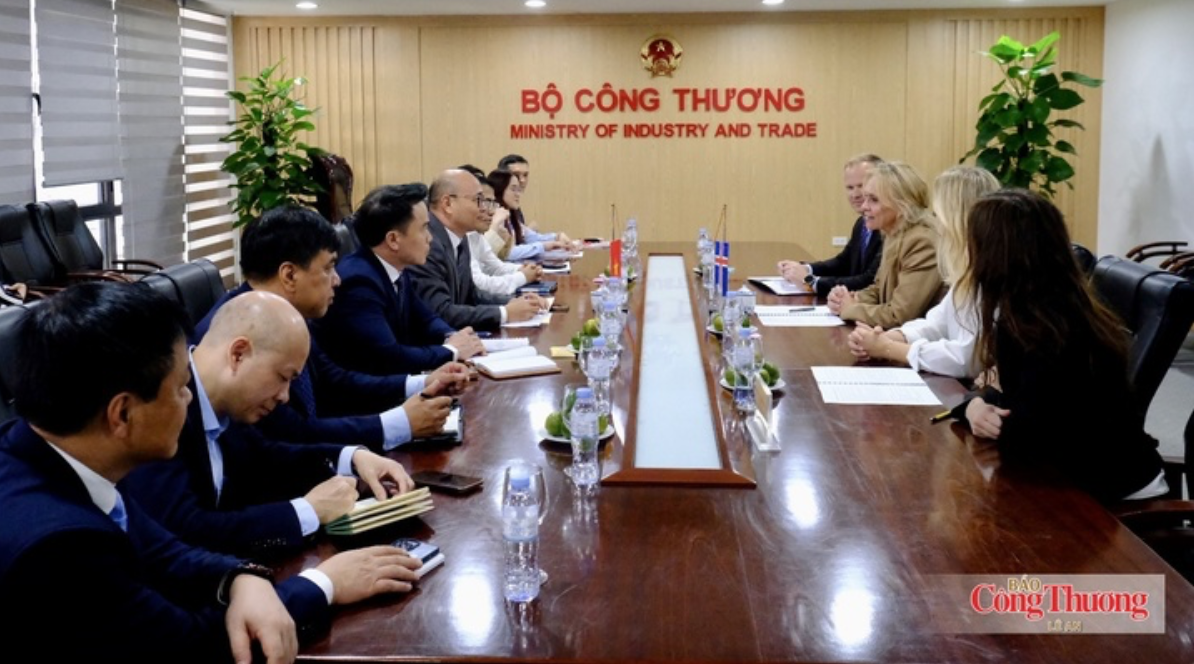
Viet Nam and Iceland discussed accelerating the Viet Nam - EFTA Free Trade Agreement deal and expanding cooperation in geothermal energy, fisheries and clean energy.
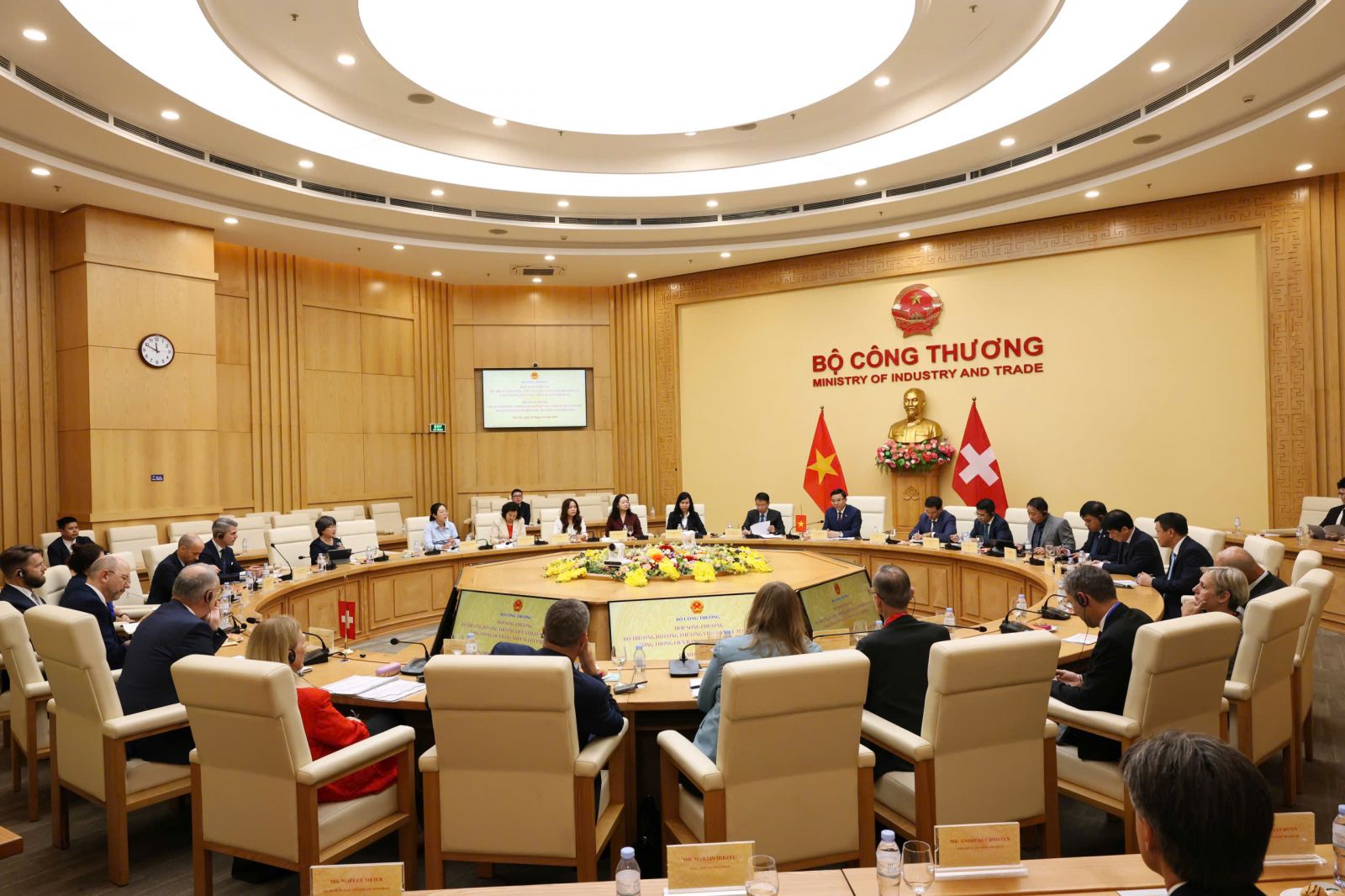
Minister Le Manh Hung and Swiss President Guy Parmelin discussed steps to bring the Viet Nam-EFTA FTA into force in early 2027 and deepen trade and investment ties.