Cooperation between HANSIBA and VJBA aims to enhance the capabilities of Vietnamese businesses and expand opportunities for them to become suppliers to Japanese companies.
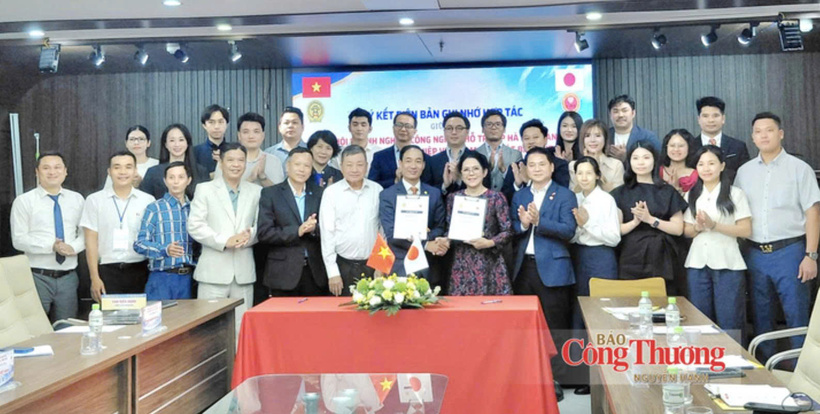
On the afternoon of September 5 in Ha Noi, the Ha Noi Supporting Industries Business Association (HANSIBA) and the Vietnamese Business Association in Japan (VJBA) held a business networking and cooperation program between Viet Nam and Japan and signed a Memorandum of Understanding (MoU). The event was attended by representatives of management agencies, associations, corporations and businesses from both countries, with a focus on promoting cooperation in processing and manufacturing, supporting industries, technology transfer and supply chain development.
HANSIBA and VJBA sign a Memorandum of Understanding, expanding cooperation between Vietnamese and Japanese businesses.
Expanding room for cooperation in supporting industries
Speaking at the event, Nguyen Van, Standing Vice Chairman of HANSIBA, said Japanese businesses have become important partners of Viet Nam’s industry in general and Ha Noi’s industry in particular. The high standards set by Japanese companies in terms of quality, technology and management have become benchmarks for Vietnamese supporting-industry enterprises to innovate, improve production capacity and gradually participate more deeply in global value chains.
However, there remains significant room for further cooperation between businesses from the two countries. As global supply chains continue to shift, strengthening in-depth linkages between Japanese companies and domestic manufacturers will not only meet cooperation needs but also help diversify supply sources, optimize costs and enhance the resilience and proactiveness of production chains.
On this basis, HANSIBA and VJBA agreed to establish a framework for cooperation to strengthen connections among Vietnamese businesses in Japan, Japanese businesses and Vietnamese enterprises; promote investment, production, technology transfer, joint ventures and business linkages; and develop supporting industries.
Under the MoU, the two sides will coordinate in sharing information on cooperation needs, production capacity, technologies, products and markets of member businesses. They will also organize business networking programs, conferences, seminars, roundtable discussions, surveys, investment promotion and trade promotion activities between Vietnamese and Japanese businesses.
The two associations will prioritize connecting businesses, investors and science and technology organizations from the two countries that seek to establish production, research and development, technology transfer and business cooperation activities in Viet Nam.
Notably, the two sides will work together to identify, introduce and connect businesses with complementary capabilities to develop joint ventures, business linkages, production cooperation, contract manufacturing, and the supply of components, spare parts, raw materials and industrial services. These efforts will support Vietnamese businesses in improving their technological capabilities, management practices, quality and production standards, thereby enhancing their ability to become suppliers to Japanese companies.
Connecting technology, human resources and supply chains
Another key area of the agreement is the promotion of technology transfer, innovation and human resource development. HANSIBA and VJBA will connect businesses with research institutes, universities, science and technology organizations and experts to implement research, application, technology transfer and production capacity-building programs.
Training programs in technical skills, management, quality standards and production skills tailored to the requirements of Japanese businesses will also be encouraged. The MoU also aims to coordinate research, promotion and connections among businesses, corporations, science and technology organizations, research institutes, universities and investors from both countries to gradually establish Viet Nam-Japan Techno Park complexes at HANSSIP industrial parks developed by Viet Nam’s N&G Group.
The complexes are envisioned as platforms for Viet Nam-Japan cooperation in high-tech manufacturing, supporting industries, research and development (R&D), technology transfer, innovation, human resource training, business incubation and supply chain connectivity.
Tran Phuong Lam, Secretary General of HANSIBA and Deputy General Director of N&G Group, said Japanese businesses have high standards in technology, quality and management. These practices provide valuable experience for Vietnamese supporting-industry enterprises to learn from, improve their production capabilities and meet international standards.
According to Lam, amid major shifts in global supply chains, strengthening in-depth cooperation between businesses from the two countries will create conditions for Vietnamese enterprises to improve their production capacity, management expertise and technological capabilities.
“The signing of the MoU on cooperation between HANSIBA and VJBA will provide a foundation for members of both associations to strengthen exchanges, build connections and seek opportunities for investment, production and business cooperation in the coming period,” Tran Phuong Lam said.
From the perspective of Vietnamese businesses operating in Japan, Tong Thi Kim Giao, Chairwoman of VJBA and Chairwoman of MOTITI Group, said one of the advantages of the Vietnamese business community in Japan is its understanding of the local culture, market and business environment.
Many Vietnamese businesses and entrepreneurs have lived and worked in Japan for extended periods, gaining experience and building networks with local companies. This provides a foundation for supporting Vietnamese businesses as they enter the Japanese market.
“People who have lived and worked in Japan for many years can help Vietnamese businesses overcome some of the difficulties and barriers arising from differences in culture, customs and working practices,” Giao said.
Tong Thi Kim Giao also noted that cross-border cooperation involves not only requirements concerning products, technology and business efficiency, but also differences in thinking, culture and working methods. Therefore, the connecting and supporting role of the Vietnamese business community in Japan can help bridge these differences during the cooperation process.
Another opportunity highlighted by Giao is Japan’s demographic aging. Many Japanese businesses are facing the need to transfer their operations to the next generation. This could create opportunities for Vietnamese companies to access, cooperate with or take over Japanese businesses, while also gaining access to Japanese technologies, production expertise and research achievements.
Giao said Vietnamese businesses have an advantage in their ability to quickly absorb and flexibly apply new technologies. In her view, combining Japanese technology and management expertise with the adaptability of Vietnamese enterprises could create complementary value for both sides.
“I hope the Vietnamese Business Association in Japan will become a bridge and an extended arm for Vietnamese businesses, helping them identify Japanese partners seeking to place orders, outsource production in Viet Nam or transfer technology,” Tong Thi Kim Giao emphasized.
Nguyen Van, Standing Vice Chairman of HANSIBA, emphasized: “Effective implementation of the MoU will require the engagement and support of management agencies, embassies, trade promotion organizations and the business communities of both countries. The goal is to translate the areas of cooperation into concrete investment, production, joint venture and technology transfer projects, thereby strengthening the capabilities of Vietnamese supporting-industry enterprises and increasing their participation in regional and global supply chains.”
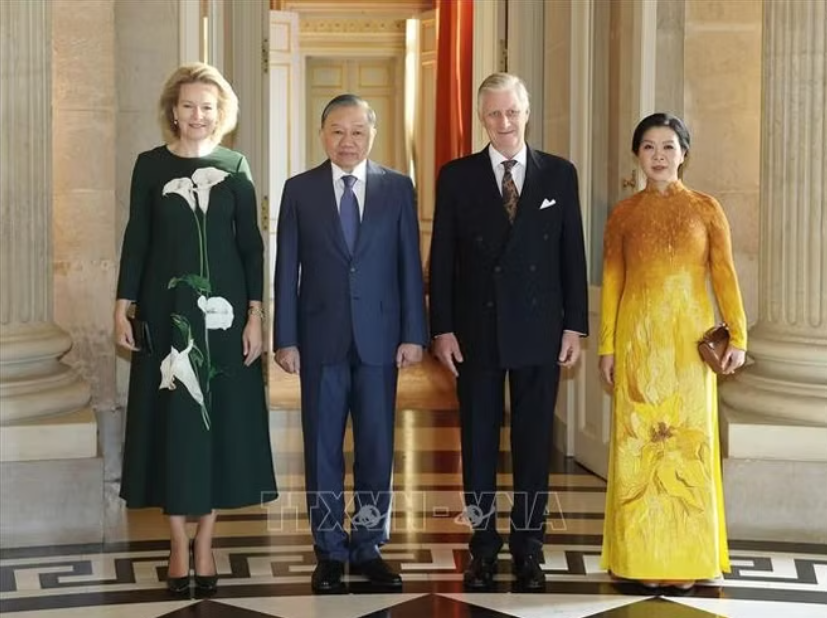
The Viet Nam Economic News respectfully presents the full text of the the Joint Statement on the outcome of the official visit to the Kingdom of Belgium by General Secretary and President To Lam.
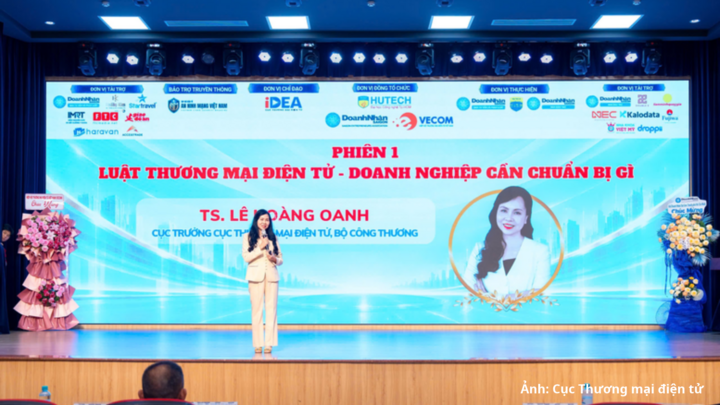
With e-commerce valued at USD 31 billion in 2025, officials called for closer government-university-business ties to enhance efficiency, skills and innovation.
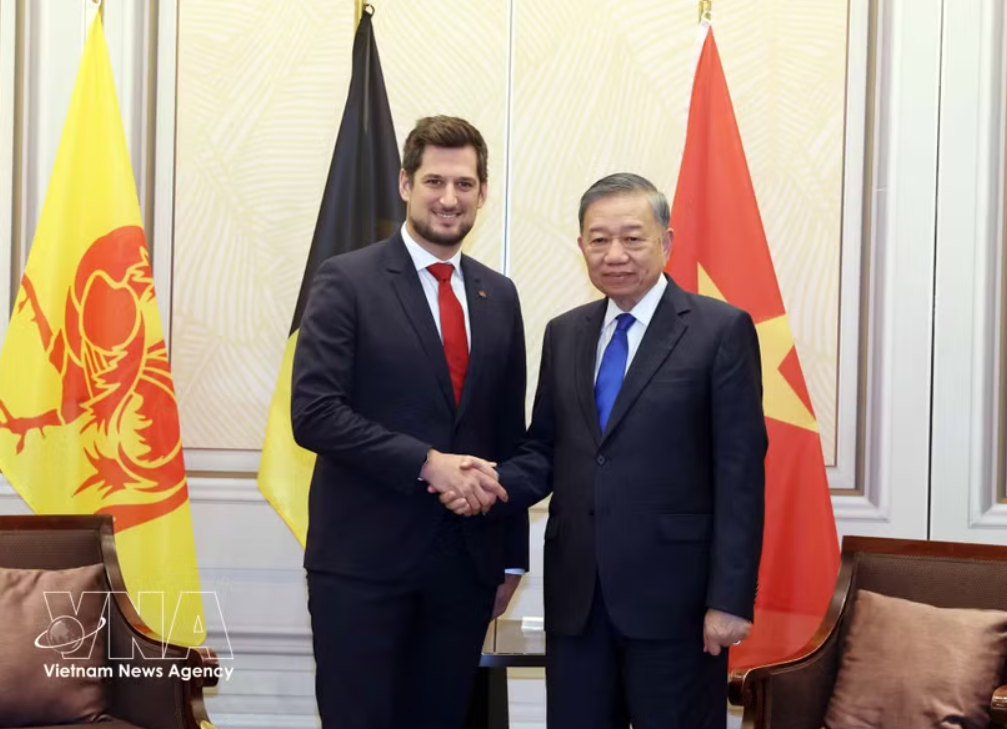
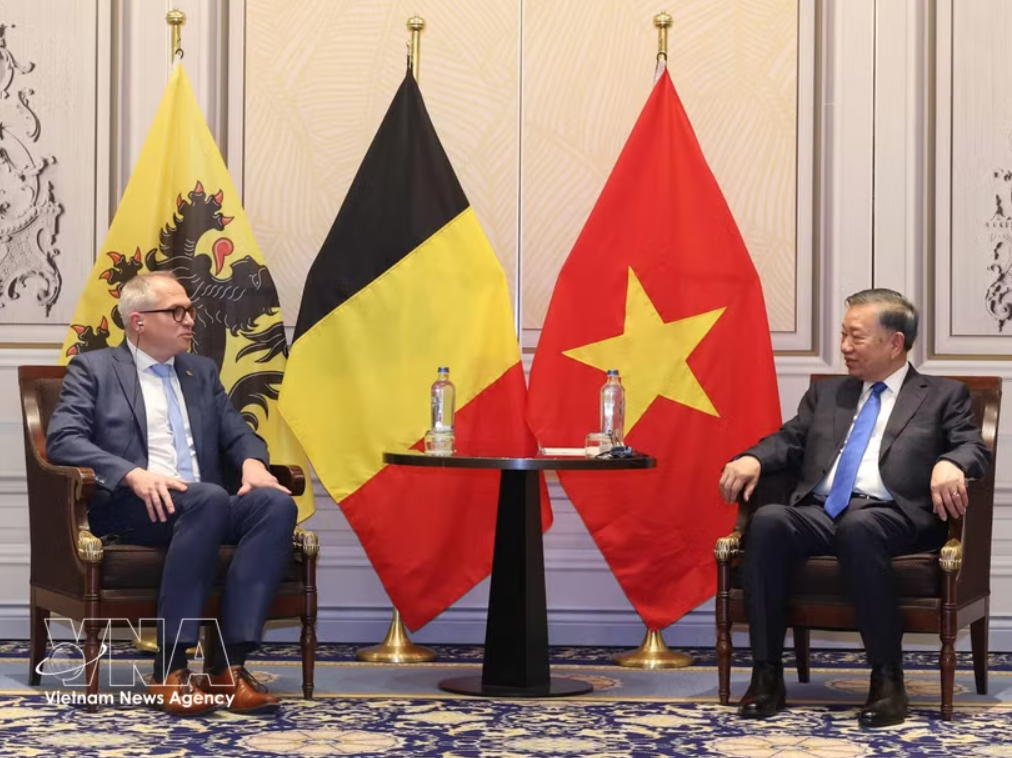
Discussing future orientations, General Secretary and President To Lam suggested that the government of the Wallonia region support the early elevation of Viet Nam–Belgium ties to a Strategic Partnership.
The host leaders described the Belgian House of Representatives' approval of the EU - Viet Nam Investment Protection Agreement (EVIPA) as tangible evidence of the two countries’ determination and potential to expand economic, trade and investment cooperation.
The top leader called on Flanders to support the early elevation of Viet Nam - Belgium relations to a strategic partnership, take a pioneering role in promoting economic cooperation, encourage businesses to expand investment in Viet Nam, and back the completion of ratification and effective implementation of the EU–Viet Nam Investment Protection Agreement (EVIPA).
The Viet Nam Economic News respectfully presents the full text of the the Joint Statement on the outcome of the official visit to the Kingdom of Belgium by General Secretary and President To Lam.
Discussing future orientations, General Secretary and President To Lam suggested that the government of the Wallonia region support the early elevation of Viet Nam–Belgium ties to a Strategic Partnership.
The host leaders described the Belgian House of Representatives' approval of the EU - Viet Nam Investment Protection Agreement (EVIPA) as tangible evidence of the two countries’ determination and potential to expand economic, trade and investment cooperation.
The top leader called on Flanders to support the early elevation of Viet Nam - Belgium relations to a strategic partnership, take a pioneering role in promoting economic cooperation, encourage businesses to expand investment in Viet Nam, and back the completion of ratification and effective implementation of the EU–Viet Nam Investment Protection Agreement (EVIPA).
Polish Prime Minister Donald Tusk will pay an official visit to Viet Nam from October 24 to 26 as the bilateral trade continues to grow, creating opportunities for deeper cooperation.